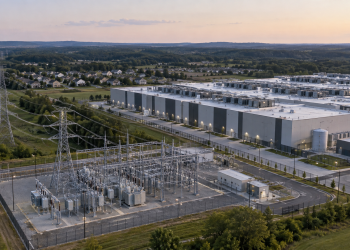
Backup power for data centers is a core part of why these facilities can keep running when the grid fails. Even short interruptions can cause outages, data corruption, or service disruption. To reduce that risk, data centers use layered standby power systems designed to bridge outages automatically and sustain operations for hours or days.
This guide explains how data center backup power works, why diesel generators remain common, how UPS systems fit into the chain, and what the main operational and community tradeoffs look like.
In One Sentence: Backup Power For Data Centers
Backup power for data centers combines UPS systems that cover seconds to minutes with diesel generators that provide longer runtime during grid outages, built with redundancy to meet uptime targets.
Why Data Centers Need Backup Power
Most modern services assume near-continuous availability. Data centers support cloud applications, payments, communications, healthcare systems, and enterprise operations. That means downtime can have real financial and safety consequences.
Grid reliability is high in many areas, but outages still occur due to storms, equipment failures, accidents, cyber incidents, and regional supply constraints. Data centers therefore plan for “when, not if,” and build their own resilience.
For context on how facilities are engineered for reliability, see how data centers work and data centers and the power grid.
The Basic Backup Power Chain
Most data centers follow a similar sequence when the grid power drops:
- Utility power disruption occurs.
- UPS instantly supplies power to keep IT equipment running without interruption.
- Generators start and synchronize, typically within seconds.
- Loads transfer to generator power through automatic transfer switches or similar controls.
- Fuel logistics sustain runtime until utility power is stable again.
This layered approach is designed to avoid even a momentary drop at the rack level.
UPS Systems Explained
A UPS (uninterruptible power supply) protects equipment from sudden power loss and power quality issues. It provides immediate power while generators start and stabilize. UPS systems also help smooth voltage fluctuations, which can be important for sensitive electronics.
Battery-Based UPS
Many sites use battery strings or modular battery cabinets. Runtime is often measured in minutes, not hours. The goal is to provide a stable bridge, not long-duration operation.
Rotary UPS And Other Designs
Some facilities use rotary UPS systems that combine mechanical inertia and electrical controls for high reliability. The design choice depends on scale, cost, maintenance model, and operational preferences.
UPS systems add to overall power overhead, which is part of why data centers use so much electricity. See why data centers use so much electricity.
Diesel Generators Explained
Diesel generators are widely used for standby power because they are proven, fast-starting, and energy dense. A well-maintained diesel generator can provide large amounts of power for extended periods, and diesel fuel is easier to store on-site than many alternatives.
How Diesel Standby Works
In a typical configuration, generators sit idle until a power loss event. When triggered, they start automatically and reach stable output quickly. Once stable, the facility transfers load from UPS to the generators.
Generator Redundancy: N, N+1, And Beyond
Data centers rarely install “exactly enough” generator capacity. Instead, they use redundancy designs so a generator can fail or be taken offline for maintenance without taking down the site.
- N: enough capacity to support the intended load.
- N+1: one extra unit beyond what is required, improving resilience.
- 2N: fully redundant capacity, often used in higher tier designs.
Redundancy strategies are explained more broadly in how data centers work.
Fuel Storage And Runtime Planning
Runtime depends on fuel storage, generator efficiency, load level, and refueling capability. Many sites store fuel on-site and maintain contracts for rapid refueling during extended outages.
Fuel planning is not just an engineering detail. It is often part of community discussion because storage tanks, deliveries, and testing can affect nearby areas.
Testing, Noise, And Community Concerns
Backup power systems must be tested. Testing ensures the generator starts, carries load, and performs as expected. However, testing can create noise and emissions that neighbors notice.
Common community concerns include:
- Noise from generator runs and cooling equipment.
- Local air quality impacts during testing or prolonged outages.
- Fuel storage safety and spill prevention practices.
- Truck traffic for fuel deliveries during outages.
For broader context on public concerns, see community opposition to data centers and zoning and permitting for data centers.
Alternatives And Complements To Diesel
Diesel is common, but it is not the only approach. Many operators explore cleaner or more flexible options, often as supplements rather than full replacements.
Battery Energy Storage Systems
Batteries can provide fast response and short to medium duration support. They can also help with power quality and, in some markets, reduce peak demand charges. Long-duration coverage still typically requires generators or grid restoration.
Natural Gas And Dual-Fuel Systems
Some facilities use natural gas generators or dual-fuel designs. These can reduce certain emissions compared to diesel, but they introduce dependencies on gas infrastructure and regional fuel availability.
Demand Response And Load Flexibility
Some operators can reduce load temporarily during grid stress, but this depends on the workload and contractual obligations. Flexibility is easier for non-urgent tasks than for latency-sensitive services.
For the grid-side view of large-load planning, see data centers and the power grid and the broader electricity discussion in data center electricity.

What Regulators And Standards Focus On
Backup power touches fire safety, emissions, storage tanks, and electrical code compliance. Requirements vary by jurisdiction, but common themes include safe fuel storage, spill prevention, noise compliance, and permitted testing schedules.
For authoritative background on generator emissions and stationary engines, the U.S. Environmental Protection Agency provides a general overview at EPA stationary sources air pollution.
Summary
Backup power for data centers is a layered system built to maintain uptime during outages. UPS systems provide instant bridge power, while diesel generators supply longer-duration electricity and redundancy. Testing and fuel planning are essential to reliability, but they also drive community concerns around noise, emissions, and safety. The best outcomes come from clear design standards, transparent operating practices, and enforceable mitigation measures.
FAQ
How Long Can A Data Center Run On Diesel Generators?
It depends on fuel storage and refueling logistics. Many sites plan for hours to days of runtime and maintain contracts for rapid fuel delivery during extended outages.
Why Do Data Centers Use Diesel Instead Of Batteries?
Batteries are excellent for instant bridging and short duration support, but diesel provides high energy density for long runtime at large scale. Many sites use both.
Do Data Centers Test Their Generators Regularly?
Yes. Regular testing is standard practice to confirm reliability. Testing frequency and duration often follow internal standards and local permit requirements.
Are Generator Emissions A Major Concern?
They can be, especially in dense areas or during prolonged outages. Many jurisdictions regulate stationary engine emissions and require permitted testing practices.
Can Renewable Energy Replace Diesel Backup Power?
Renewables can reduce grid emissions, but backup power needs firm, on-demand energy. Batteries and other technologies can help, but many facilities still rely on generators for long-duration coverage.
What Can Communities Ask For In A Permitting Process?
Communities can request clear noise limits, testing schedules, emissions controls where applicable, spill prevention plans, and transparent reporting of generator operations.