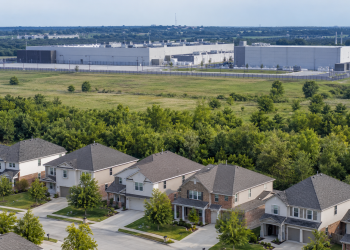
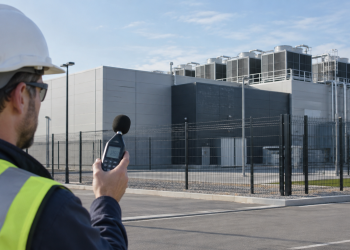
Data center building permits can reveal far more about a project than a press release.
Permit files, site plans and zoning records can help answer:
- How many buildings are planned?
- How large will they be?
- Where will generators be located?
- Is a substation included?
- How close is the project to homes?
- What phase is currently under construction?
- What approvals remain?
The challenge is that there is no national database containing every local data center building permit.
Most land-use and building records are maintained by cities, counties and states, so finding them requires knowing where to look.
Where to Find Data Center Building Permits
Start with the local government responsible for building and land-use approvals.
Depending on the jurisdiction, that may be called:
- Building Department
- Planning Department
- Community Development
- Development Services
- Planning and Zoning
- Department of Permitting
Search the government’s website for:
building permit search
or
permit portal
Then search using:
- Property address
- Parcel number
- Property owner
- Developer
- Project name
Do not rely only on the data center’s marketing name.
A permit may be filed under the property owner, engineering firm or a project LLC.
Data Center Building Permits vs. Zoning Records
These are different.
Zoning Records
Zoning determines whether and how the land can be used.
Records can include:
- Rezoning applications
- Special-use permits
- Special exceptions
- Variances
- Conditions of approval
Building Permits
Building permits authorize specific construction.
They can include:
- Building size
- Construction value
- Contractor
- Permit status
- Work description
A project may therefore receive zoning approval months before the first building permit is issued.
Our broader guide to public records for data center development explains the overall records ecosystem.
This article focuses specifically on finding data center building permits, site plans and zoning records efficiently.
Step 1: Find the Parcel
The parcel is the foundation of your search.
Use the county or city GIS system to determine:
- Parcel number
- Owner
- Acreage
- Property boundaries
- Zoning classification
Search terms such as:
[county name] GIS
or
[county name] property search
usually lead to the assessor or mapping portal.
Once you have the parcel number, searching other systems becomes much easier.
Step 2: Search the Planning Department
The planning case file often contains the most useful information about a proposed data center.
Look for:
- Rezoning case
- Special-use permit
- Site plan
- Staff report
- Conditions
- Applicant documents
- Public comments
The planning case may use terminology other than “data center.”
Try searches such as:
- Data center
- Data centre
- Technology campus
- Computer facility
- Server facility
- Digital infrastructure
- Utility campus
Step 3: Search Planning Commission Agendas
If the project requires public approval, it may appear before:
- Planning Commission
- Zoning Board
- County Board
- City Council
- Board of Supervisors
Meeting packets are extremely useful.
They can contain hundreds of pages including:
- Site plans
- Staff analysis
- Traffic studies
- Noise studies
- Applicant presentations
- Conditions of approval
Search the agenda archive for the:
- Address
- Developer
- Parcel
- Project name
Step 4: Find the Site Plan
The site plan is often the single most useful project document.
A data center site plan can reveal:
- Building footprint
- Building count
- Setbacks
- Generator yards
- Cooling equipment
- Substation
- Internal roads
- Parking
- Stormwater
- Landscaping
- Future phases
This is where the project’s real physical scale becomes visible.
What to Look for on a Data Center Site Plan
Pay particular attention to:
Property Boundary
Make sure you understand the entire project parcel.
Building Labels
Look for:
- Building 1
- Building 2
- Future building
- Phase 2
- Future expansion
Generator Yard
Large facilities can contain many backup generators.
Electrical Yard
Look for:
- Substation
- Transformer yard
- Switchyard
- Utility yard
Our guide to data center substation design can help identify what this infrastructure looks like.
Setbacks
Measure the distance between project infrastructure and surrounding homes.
Our data center setback guide explains why the distance to equipment can matter as much as the distance to the building.
Step 5: Search for Data Center Building Permits
Once zoning is approved, search the local permit portal.
Possible permit categories include:
- Commercial building
- Electrical
- Mechanical
- Plumbing
- Grading
- Demolition
- Generator
- Fuel storage
One data center building can generate many individual permits.
Look for related permits tied to the same:
- Address
- Parcel
- Applicant
- Contractor
Step 6: Check Air Permits for Generators
Large data centers often use many stationary backup generators.
Depending on the project and jurisdiction, these engines can require environmental permits.
EPA maintains dedicated Clean Air Act resources for data centers.
EPA notes that state and local air agencies issue most data center air permits under programs implementing Clean Air Act requirements.
Those permit records can reveal:
- Generator count
- Engine type
- Horsepower
- Fuel
- Operating limits
- Emissions
Step 7: Search EPA ECHO
EPA’s Enforcement and Compliance History Online database can help locate environmental records associated with regulated facilities.
EPA says ECHO can be searched by:
- Facility name
- Facility ID
- Location
- Environmental program
The system includes information related to:
- Clean Air Act
- Clean Water Act
- Hazardous waste
- Enforcement and compliance
Not every proposed data center will appear immediately.
But ECHO can become useful once environmental permits are issued or the facility enters regulated databases.

Step 8: Check Stormwater Permits
Large construction projects disturb substantial acreage.
Construction stormwater permits and plans can reveal:
- Construction boundaries
- Disturbed acreage
- Drainage
- Stormwater basins
- Project phases
Search the state environmental agency responsible for:
- NPDES
- Construction stormwater
- Water permits
These records can sometimes appear before ordinary residents realize construction is beginning.
Step 9: Search Utility and Regulatory Filings
Power requirements can create another set of records.
Depending on the utility structure and state, search:
- Public utility commission
- Public service commission
- Transmission operator
- Utility board
Relevant filings may involve:
- Substations
- Transmission lines
- Large-load tariffs
- Service agreements
- Grid upgrades
Our guide to data center transmission lines explains why these infrastructure projects can reveal the true scale of a planned campus.
Step 10: Search the Property Owner, Not Just the Data Center Company
Developers frequently use limited-liability companies.
A proposed project might be publicly associated with a major technology company but legally filed under something like:
Example Development Holdings LLC
Search:
- Current property owner
- Former owner
- Applicant
- Engineering firm
- Developer LLC
This can uncover documents that do not contain the company’s recognizable name.
How to Find a Data Center Before It Is Publicly Announced
The earliest clues can include:
- Land purchases
- Rezoning
- Utility filings
- Substation applications
- Traffic studies
- Water-service requests
- Site plans
A project can therefore leave a public-record trail before a formal press release.
Our guide explaining how to find out if a data center is planned near you walks through this investigative process.
What If the Records Aren’t Online?
You may need to submit a public-records request.
The exact law depends on the state.
An important distinction:
The federal Freedom of Information Act applies to federal agencies, not state and local governments.
FOIA.gov explicitly notes that federal FOIA does not apply to state and local governments.
States have their own:
- Freedom of Information laws
- Sunshine laws
- Open records laws
- Public records statutes
Use the appropriate state law when requesting city or county records.
What Should a Public Records Request Ask For?
Be specific.
Instead of:
“Send me everything about the data center.”
try requesting:
“The complete planning and zoning case file for the proposed data center at [address/parcel], including applications, site plans, staff reports, conditions, technical studies and correspondence.”
You may also request specific categories:
- Building permits
- Site plans
- Acoustic studies
- Traffic studies
- Generator permits
- Utility correspondence
- Water studies
Narrow requests are generally easier for agencies to process.
How to Tell Which Documents Matter Most
If a case file contains hundreds of pages, start here:
1. Staff Report
Usually provides the clearest summary.
2. Site Plan
Shows what is physically proposed.
3. Conditions of Approval
Shows what is legally required.
4. Noise Study
Shows modeled sound and equipment assumptions.
5. Traffic Study
Shows construction and operational traffic.
6. Utility Information
Can reveal power requirements and infrastructure.
Conditions of Approval Are Especially Important
A developer presentation can make promises.
Conditions of approval determine what is enforceable.
Look for requirements covering:
- Noise
- Setbacks
- Landscaping
- Generator testing
- Traffic routes
- Building height
- Lighting
Then ask:
Who enforces the condition?
and
What happens if the developer violates it?
Our data center town hall questions include additional accountability questions.
How to Track a Project After Approval
Approval is not the end.
Continue checking:
- Building permits
- Grading permits
- Air permits
- Utility filings
- Planning amendments
- Future phases
A campus can change significantly over time.
A developer may later request:
- Additional buildings
- More generators
- Greater electrical capacity
- Revised setbacks
Tracking permit activity helps identify those changes.
Frequently Asked Questions About Data Center Building Permits
Where can I find data center building permits?
Start with the city or county building department’s online permit portal. Search by address, parcel number, property owner and developer.
Are data center site plans public?
Often, especially when submitted as part of a zoning or planning application. Availability varies by jurisdiction.
How do I find out how many data center buildings are planned?
Review the full site plan and zoning case file, paying particular attention to future phases and buildings labeled for future development.
Can I find data center generator permits?
Potentially. Search state or local air permitting agencies and EPA ECHO for applicable environmental records.
Does federal FOIA apply to county data center records?
No. Federal FOIA applies to federal agencies. State and local records are governed by state public-records laws.
How do I know if a data center has started construction?
Building, grading and construction stormwater permits can provide useful evidence that physical work is beginning.
Bottom Line: Data Center Building Permits Reveal the Real Project
Data center building permits, site plans and zoning records are among the best sources for understanding what a developer actually intends to build.
Start with:
- Parcel/GIS records
- Planning and zoning case files
- Site plans
- Building permits
- Environmental permits
- Utility filings
Do not search only by project name.
Use:
- Address
- Parcel ID
- Property owner
- Developer
- Applicant LLC
The more records you combine, the clearer the project becomes—and the less you have to rely on press releases or public presentations.