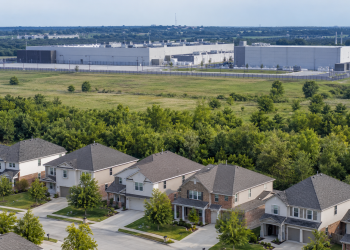
Data center diesel generator permitting is one of the least understood parts of data center development. Backup generators are critical for reliability, but they also create real air quality questions: What rules apply? How many hours can generators run for testing? What counts as “emergency” versus “non-emergency” operation? And what can the public verify in permits and public records?
This guide explains data center diesel generator permitting in plain English. We cover the main federal standards that typically apply to stationary diesel engines, how “hours limits” work for emergency generators, where Title V and New Source Review can come into play, and what communities can look for in permits to separate facts from assumptions.
Key Takeaways
- Data center diesel generator permitting is real air regulation, not a “paperwork exercise.” Permits and federal standards can impose operating limits, maintenance requirements, and recordkeeping.
- Two core federal rule families show up frequently for stationary diesel engines: NSPS (40 CFR Part 60 Subpart IIII) and RICE NESHAP (40 CFR Part 63 Subpart ZZZZ).
- Emergency generator testing hours are not unlimited. Federal rules commonly reference limits such as 100 hours per year for maintenance/testing and limited non-emergency operation allowances that count within that cap.
- Title V depends on “major source” thresholds, which are often framed in tons per year and vary with attainment status and pollutant type.
- Communities can verify a lot by reading permit conditions: allowed hours, fuel type, emissions limits, monitoring, reporting, and complaint response procedures.
Why Data Centers Use Diesel Generators In The First Place
Data centers are designed for high uptime. Even short interruptions can have outsized consequences for customers and workloads. That is why most facilities deploy backup power systems, often including diesel generators, to ride through outages and support critical loads until grid service stabilizes.
If you want the technical foundation first, start here: Backup Power For Data Centers: Diesel Explained.
What “Data Center Diesel Generator Permitting” Actually Covers
When people say data center diesel generator permitting, they are usually talking about a combination of:
- Preconstruction permitting (often under state/local programs that implement Clean Air Act permitting)
- Federal engine standards that apply to the stationary diesel engines themselves
- Operating permit programs (Title V) if the facility is considered a “major source”
- Ongoing compliance requirements such as recordkeeping, maintenance schedules, and sometimes stack testing
Importantly, generator permitting is not only about a single engine. Regulators often evaluate the combined emissions potential of multiple engines and other onsite combustion sources when determining which programs apply.
The Two Federal Rule Sets You’ll See Most Often
Many data center generator fleets fall under two key federal frameworks:
1) NSPS For Stationary Diesel Engines (40 CFR Part 60 Subpart IIII)
The New Source Performance Standards (NSPS) for stationary compression ignition engines are codified in 40 CFR Part 60 Subpart IIII. This subpart applies based on factors such as when the engine was ordered/constructed and whether it is a stationary compression ignition engine. You can view the regulatory text here: eCFR: 40 CFR Part 60 Subpart IIII.
EPA also provides an overview page that points operators to the NSPS framework: EPA: NSPS For Stationary CI Engines.
2) RICE NESHAP For Stationary Engines (40 CFR Part 63 Subpart ZZZZ)
The National Emission Standards for Hazardous Air Pollutants (NESHAP) for stationary reciprocating internal combustion engines (RICE) are commonly referred to as Subpart ZZZZ. The rule includes requirements that vary by engine type, size, and whether the engine is at a major or area source of hazardous air pollutants. You can view the regulatory text here: eCFR: 40 CFR Part 63 Subpart ZZZZ.
EPA maintains plain-language “rules navigation” resources for stationary engines and compliance requirements that help interpret how Subpart IIII and Subpart ZZZZ can apply. See: EPA: Understanding The Stationary Engines Rules and EPA: Compliance Requirements For Stationary Engines.
Emergency Generators, Testing Hours, And The “100 Hours” Concept
One of the most common community questions about data center diesel generator permitting is: “How often can these generators run?” The answer depends on what the generator is classified as and what the permit requires, but federal rules commonly include operating-hour concepts for emergency engines.
For example, Subpart ZZZZ includes language addressing emergency engine operation limits for maintenance/testing and certain non-emergency operation that counts within those limits (see: eCFR Subpart ZZZZ). Subpart IIII includes similar compliance-requirement framing for emergency stationary CI engines (see: eCFR Subpart IIII compliance requirements).
Practical takeaway: if a project says “emergency generators only,” the permitting details still matter. You want to know what the permit says about:
- Maintenance and readiness testing (hours per year)
- Non-emergency operation allowances (if any)
- Demand response participation (sometimes heavily constrained and closely defined)
- Recordkeeping requirements for hours, fuel use, and maintenance

When Does Title V Apply To Data Centers?
Title V is the federal operating permit program for “major sources.” Many data centers aim to remain minor sources for permitting simplicity, but large generator fleets can push potential emissions upward.
EPA’s Title V overview explains that a major source threshold is commonly 100 tons per year for any air pollutant, with lower thresholds in nonattainment areas for certain pollutants, and separate thresholds for hazardous air pollutants (HAP) such as 10 tons/year for a single HAP or 25 tons/year combined HAP. See: EPA: Who Has To Obtain A Title V Permit?.
Why communities should care: Title V permits typically consolidate requirements into a single operating permit with standardized monitoring, reporting, and compliance obligations. If a facility is major source, the documentation and transparency can be more robust.
New Source Review And “Potential To Emit” For Generator Fleets
Another core theme in data center diesel generator permitting is New Source Review (NSR) and the concept of Potential To Emit (PTE). PTE is often calculated as if equipment could operate at maximum capacity over a full year, unless enforceable permit limits restrict operations.
EPA has a dedicated resource hub for data centers that includes guidance and historical materials, including resources on PTE calculations for emergency generators and how enforceable limits can affect permitting pathways. See: EPA: Clean Air Act Resources For Data Centers.
Plain-English example: a large fleet of diesel generators might have a high “worst case” PTE if assumed to run many hours. If the permit enforces low annual runtime limits consistent with emergency classification, the PTE for permitting purposes may be lower. This is one reason permit language is so important.
What Permit Conditions Typically Look Like For Data Centers
If you open a permit and want to understand data center diesel generator permitting quickly, look for these sections:
1) Equipment list and engine ratings
Permits usually list each engine, its horsepower or kW rating, fuel type, and sometimes model year or certification references.
2) Emissions limits or certification requirements
Some permits rely on certified engine standards; others specify emissions limits and compliance methods. EPA’s stationary engine compliance page explains that NSPS compliance is often satisfied by purchasing certified engines or meeting applicable limits depending on engine type and configuration. See: EPA: Compliance Requirements For Stationary Engines.
3) Operating limits (hours, modes, and restrictions)
This is where you find annual testing limits, restrictions on non-emergency operation, and any special conditions around demand response or peak shaving.
4) Monitoring and recordkeeping
Typical requirements include hour-meter logs, maintenance records, fuel records, and sometimes specific reporting schedules. This is a key enforcement lever for data center diesel generator permitting.
5) Testing and verification
Some engines require performance testing or periodic verification depending on classification and permit conditions. The important point is not “do they test,” but “what must be tested, how often, and what triggers corrective action.”
What Communities Can Verify Without Guessing
Communities do not need to rely on rumors to evaluate data center diesel generator permitting. Much of what matters is verifiable:
- Permit existence and scope: Is there an air permit? What equipment does it cover?
- Hours limits: What are the annual operating hour limits for maintenance/testing?
- Non-emergency operation: Is any allowed, and under what conditions?
- Reporting cadence: Are there annual reports, deviation reports, or semiannual certifications?
- Complaint process: Does the permit or local approval require response timelines and measurement protocols?
If you are building a “public diligence” workflow, this pairs well with: Public Records For Data Center Development and Environmental Review For Data Centers Explained.
Developer Checklist: How To Reduce Permitting And Community Risk
- Start generator permitting early. Generator fleets can define the project’s air permitting path and schedule.
- Be explicit about operating modes. If the design is emergency-only, make that clear in enforceable terms.
- Publish testing windows. Many disputes are about surprise events, not just emissions math.
- Align design with transparency. Strong recordkeeping and clear limits reduce both regulator and community friction.
- Plan for expansion. If Phase 2 adds generators, treat it as a permitting and trust issue up front.
Frequently Asked Questions
Do emergency generators have unlimited runtime during an emergency?
Emergency operation is typically treated differently from non-emergency operation, but the exact boundaries depend on federal definitions and your permit conditions. Many rules focus on limiting non-emergency and testing/maintenance hours while recognizing true emergency needs. The regulatory text is the most defensible reference point: Subpart ZZZZ and Subpart IIII.
Can data centers run diesel generators for “grid support” or demand response?
Sometimes, but this is exactly where data center diesel generator permitting becomes sensitive. Certain non-emergency uses can be restricted or tightly defined, and they often must be tracked in operating hour logs and records. Always verify by reading the permit conditions and the applicable federal rule text.
How can a resident know whether generators are being tested too often?
The strongest approach is documentation. Permits often require hour meters and logs. Residents can request permit documents, compliance reports, and complaint logs through the relevant agency processes. Start with: Public Records For Data Center Development.
Does a data center automatically need a Title V permit if it has many generators?
No. Title V depends on whether the facility is a “major source” under applicable thresholds and how PTE is calculated with enforceable limits. EPA summarizes the Title V “major source” concepts here: Who Has To Obtain A Title V Permit?.
Bottom Line
Data center diesel generator permitting is the bridge between reliability design and air quality accountability. The good news is that most of the most important questions are answerable by reading permits and rule references: what standards apply, how many hours testing can occur, what recordkeeping is required, and what reporting must be filed. If developers treat generator compliance as a core workstream and communities focus on verifiable permit conditions, debates become more factual, less emotional, and easier to resolve.
Sources And Further Reading
- EPA: Clean Air Act Resources For Data Centers
- eCFR: 40 CFR Part 60 Subpart IIII (NSPS For Stationary CI Engines)
- eCFR: 40 CFR Part 63 Subpart ZZZZ (RICE NESHAP)
- EPA: Compliance Requirements For Stationary Engines
- EPA: Understanding The Stationary Engines Rules
- EPA: Who Has To Obtain A Title V Permit?