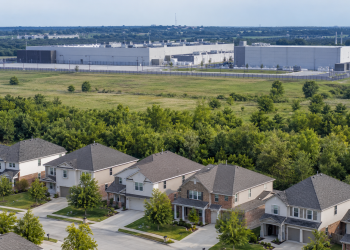
Data center fire safety is not just a checklist item. It is a layered system of code requirements, engineering design, and operational discipline that has to work under the worst conditions: a battery failure, an electrical fault, or a cascading equipment event in a building that is designed to run 24/7.
This guide explains data center fire safety in plain English. We will cover how modern data centers are protected, why batteries are a focal point, what NFPA and International Fire Code (IFC) frameworks try to achieve, and what communities can realistically verify in permits, inspections, and public records.
Key Takeaways
- Data center fire safety is built on three pillars: early detection, effective suppression, and compartmentalization that prevents spread.
- Batteries change the conversation. Lithium-ion and other energy storage technologies introduce thermal runaway scenarios that require specific design and testing approaches.
- Codes are not one-size-fits-all. Requirements depend on the local Authority Having Jurisdiction (AHJ), adopted fire code edition, and the facility’s battery and suppression design.
- UPS rooms and energy storage are treated differently. Traditional IT equipment protection approaches (NFPA 75) and energy storage safety approaches (NFPA 855 / IFC ESS provisions) may both apply depending on what is installed.
- Communities can verify facts. Fire protection features are typically documented through plan review, inspection sign-offs, and code compliance filings.
What “Data Center Fire Safety” Means In Practice
When people hear data center fire safety, they often imagine one system: sprinklers. In modern facilities, safety is typically a coordinated stack of:
- Detection (spot detectors, aspirating smoke detection, alarms, monitoring)
- Suppression (pre-action sprinklers, clean agent systems, portable extinguishers, water supply)
- Containment (rated walls/doors, equipment spacing, smoke control strategies)
- Electrical protection (selective coordination, arc flash mitigation, shutdown procedures)
- Operations (maintenance, housekeeping, hot work controls, incident response)
Good data center fire safety is as much about preventing a small event from becoming a large event as it is about extinguishing flames.
Why Batteries Are A Big Topic In Data Center Fire Safety
Data centers rely on battery-backed UPS systems to bridge outages and stabilize critical loads. Batteries are essential for uptime, but they also concentrate energy in a small footprint. That is why batteries are central to data center fire safety discussions, especially as lithium-ion deployments expand.
Battery risk is not primarily about “a typical fire.” It is about:
- Thermal runaway (one cell failure that can propagate)
- Heat release and smoke (even when open flame is limited)
- Gas generation (which can create pressure and explosion concerns in enclosed spaces)
- Re-ignition potential (in certain failure scenarios)
The practical outcome is that data center fire safety planning increasingly includes battery-specific design, monitoring, and testing requirements, not just general building protection.
The Code Landscape: NFPA 75, NFPA 855, And IFC Energy Storage Rules
Fire safety requirements depend heavily on what code editions your jurisdiction adopts and how your AHJ interprets them. Three widely referenced frameworks show up frequently in data center fire safety planning:
NFPA 75: IT Equipment Areas
NFPA 75 focuses on protecting information technology equipment and IT equipment areas. It is often used as a baseline reference for IT space fire protection design and operational requirements. NFPA maintains the standard development page here: NFPA 75 Standard Development.
NFPA 855: Stationary Energy Storage Systems
NFPA 855 provides minimum requirements for mitigating hazards associated with energy storage systems (ESS). This is highly relevant when a data center’s battery system is treated as an ESS installation subject to ESS-specific criteria. NFPA’s standard development page is here: NFPA 855 Standard Development, and NFPA also provides a product overview page: NFPA 855 Product Page.
International Fire Code (IFC) Section 1207: Energy Storage Systems
The IFC includes specific provisions for energy storage systems. ICC provides public code text access for IFC editions; for example, IFC 2024 Section 1207 can be viewed here: IFC 2024 Section 1207 (ESS).
Important nuance: Not every battery room is regulated the same way everywhere. Whether a UPS battery installation is treated under general IT equipment protection concepts, ESS-specific concepts, or both depends on the code edition, the installation type, and AHJ interpretation. That is why early AHJ engagement is a core data center fire safety strategy.
Detection: How Data Centers Find Fire Early
Because the goal of data center fire safety is to stop escalation, early detection is foundational. Typical detection approaches include:
Spot Smoke Detectors
These are common building detectors used across many commercial environments. They can be effective but may not provide the earliest possible warning in high-airflow IT spaces.
Aspirating Smoke Detection (Very Early Warning)
Aspirating systems sample air continuously through a network of small pipes and can detect smoke at very low concentrations. In many designs, these systems provide early warning before smoke becomes visible or widespread.
Battery Monitoring And Thermal Detection
As batteries become more central, data center fire safety often includes battery management systems (BMS), temperature monitoring, alarms for abnormal conditions, and spacing/ventilation design intended to reduce propagation risk.

Suppression: What Actually Puts The Fire Out
Suppression in data center fire safety is typically layered because different hazards behave differently.
Pre-Action Sprinkler Systems
Pre-action systems are widely used in mission-critical environments. They reduce the risk of accidental water release because the system typically requires a detection event before water is allowed into the piping. This approach is common in areas where water damage risk is a major concern, while still ensuring that water-based suppression is available when needed.
Clean Agent Fire Suppression
Clean agent systems can suppress certain fire types without leaving residue, which can be attractive for sensitive equipment areas. These systems are designed to extinguish or control fire rapidly in enclosed spaces, but effectiveness depends on room integrity, leakage, and proper design assumptions.
Portable Extinguishers And Response Procedures
Operational readiness is part of data center fire safety. Proper extinguisher placement, staff training, and clear escalation protocols matter, especially for incipient-stage events.
Batteries: Why Suppression Is More Complex
Battery incidents can involve smoke, heat, and gas generation that behave differently than a typical Class A fire. That is one reason code frameworks increasingly emphasize design, spacing, ventilation, and testing methods to understand how a battery system behaves under failure conditions.
UL 9540A And Why Testing Matters For Battery Fire Risk
One of the most cited concepts in modern battery safety discussions is UL 9540A, a test method used to evaluate thermal runaway fire propagation in battery energy storage systems. UL describes the test method and its role in meeting fire safety and code requirements here: UL 9540A Test Method.
UL also provides additional context on energy storage testing and notes UL 9540A’s relevance to code expectations: UL Energy Storage System Testing And Certification. The practical point for data center fire safety is that test-based evidence can influence design decisions and AHJ approvals when lithium-ion or ESS-style battery deployments are involved.
Containment: Keeping A Small Event From Becoming A Big Event
Containment is an underappreciated piece of data center fire safety. Even strong suppression is less effective if smoke and heat spread quickly through a facility. Common containment strategies include:
- Fire-rated walls and doors separating electrical rooms, battery rooms, and IT halls
- Compartmentalization that limits the size of any single fire area
- Smoke management approaches tailored to airflow-heavy environments
- Penetration management (cable trays, conduits, and openings sealed appropriately)
For community-facing framing, containment often connects to a simple question: “If something happens, does it stay contained?” That question sits at the heart of data center fire safety design reviews.
Operational Fire Safety: The Part That Fails When People Ignore It
Even excellent engineering can be undermined by weak operations. In real facilities, data center fire safety often depends on:
- Preventive maintenance for electrical gear, UPS systems, and suppression systems
- Housekeeping (combustible storage controls, cable management, clear access paths)
- Hot work controls (welding, cutting, contractor oversight)
- Change management (expansions, battery swaps, new equipment layouts)
- Emergency response coordination with local fire departments
If you have built incident response content for other risk areas, this is where it connects: operational readiness makes engineered systems credible.
What Communities Can Verify About Data Center Fire Safety
Communities often hear “we meet code,” but they do not know what that means. The good news is that data center fire safety generates paperwork and sign-offs. Depending on local processes, residents can often verify:
- Which code edition applies (IFC year, local amendments)
- Fire protection system type (pre-action, clean agent, standard sprinkler)
- Battery room treatment (design basis, ventilation, separation, monitoring expectations)
- Inspection outcomes (certificate of occupancy, fire marshal approvals, special inspection notes)
- Emergency access and water supply considerations (hydrants, fire lanes, response planning)
Two internal resources that pair well with this verification approach are:
Developer Checklist: A Practical Data Center Fire Safety Plan
- Confirm the data center fire safety code basis early (IFC edition, local amendments, AHJ expectations).
- Document battery scope clearly (UPS vs ESS classification, chemistry, room layout, ventilation assumptions).
- Use layered protection: early detection + appropriate suppression + compartmentalization.
- Align commissioning with enforcement: acceptance tests, inspection sign-offs, and ongoing maintenance plans.
- Coordinate with fire services: access routes, shutoff procedures, and emergency contacts before go-live.
Frequently Asked Questions
Are data centers high fire risk?
Data center fire safety is designed around the reality that data centers concentrate electrical infrastructure and energy storage. The goal is not to claim “no risk,” but to reduce ignition likelihood, detect early, and prevent escalation through engineered and operational controls.
Do lithium-ion batteries make data centers less safe?
They change the hazard profile. Lithium-ion deployments can involve thermal runaway scenarios, which is why ESS-related code frameworks and testing methods such as UL 9540A exist to better characterize and mitigate propagation risk. See UL’s overview: UL 9540A Test Method.
What should residents ask about battery rooms?
Ask how the design addresses data center fire safety in battery spaces: separation, ventilation, monitoring, suppression approach, and what code framework is being used (IFC Section 1207, NFPA 855, or other adopted requirements).
Can fire code requirements change after approval?
Yes. If a project expands, changes battery chemistry, or modifies room layouts, it may trigger new plan review requirements. Treat data center fire safety as a lifecycle topic, not a one-time approval.
Bottom Line
Data center fire safety is a systems problem: detection, suppression, containment, and disciplined operations working together. Batteries have increased attention on thermal runaway and ESS-style safety requirements, but the bigger lesson is simple. The safest projects align code basis, design, commissioning, and transparency early, so both operators and communities understand what is installed, how it is protected, and how compliance is verified over time.
Sources And Further Reading
- NFPA 75 Standard Development: Fire Protection Of IT Equipment
- NFPA 855 Standard Development: Stationary Energy Storage Systems
- NFPA 855 Product Page (Overview)
- International Fire Code (IFC) 2024 Section 1207: Energy Storage Systems
- UL 9540A Test Method For Battery Energy Storage Systems
- UL: Energy Storage System Testing And Certification (UL 9540A Context)