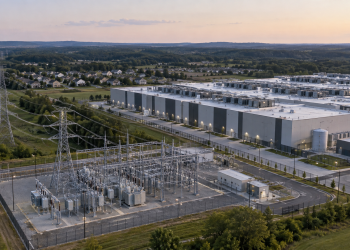
A data center interconnection queue is the formal “line” where a project requests approval to connect a large electrical load to the grid. It sounds simple. In practice, the queue is one of the biggest schedule risks in modern data center development because it triggers engineering studies, upgrade requirements, cost responsibility decisions, and timelines that can change as the grid and the queue change.
If you have ever heard “the substation is nearby, so power should be easy,” the interconnection queue is the reality check. Proximity is not the same as deliverability. What matters is whether the grid can reliably serve your load under normal and contingency conditions, and what infrastructure must be built to make that true.
Key takeaways
- The queue is for studies, not construction. Entering the queue does not mean your site is “approved for power.” It means the engineering work begins.
- Upgrades are usually the bottleneck. The delay is often the required substation, transformer, or transmission work, plus equipment lead times.
- Queue timelines change because the queue changes. Withdrawals, resizing, and restudies can reshape your results after you have already started.
- Cost responsibility is a major negotiation point. Many projects stall when upgrade costs land higher than expected or cannot be clearly allocated.
- Early utility engagement is now critical path. Treat interconnection like permitting and financing: it needs its own plan, owner, and risk controls.
What an interconnection queue is (in plain English)
The interconnection queue is the structured process utilities and grid operators use to evaluate whether a new facility can connect without violating reliability standards. For data centers, this usually involves:
- Bulk system impacts (transmission-level constraints and regional reliability)
- Local impacts (distribution feeders, substation capacity, transformer sizing, protection equipment)
That split matters. You can be “close to power” but still face a multi-year path to energization if transmission constraints, substation limits, or required upgrades are significant.
If you want the broader context, start here:
Why data center projects stall in the interconnection queue
Projects typically stall for a combination of technical, procedural, and supply-chain reasons. The most common are:
1) Study backlogs and re-studies
Queues are congested across the U.S. When volumes are high, operators must process more requests, run more scenarios, and do more restudies when assumptions change. Cluster-based approaches are intended to improve throughput, but they still require complex coordination across many projects.
2) Changing assumptions inside the queue
Your interconnection result is not created in isolation. It depends on what else is in the queue. When other projects withdraw, change size, or change timelines, the grid impact picture changes, and your project can be pulled into restudies.
3) “Network upgrades” are larger than expected
Many data center teams plan for “a new transformer” and discover they need broader system work such as reconductoring, breaker replacements, relay upgrades, or even new transmission lines. Those upgrades can require regulatory approvals and long construction windows.
4) Equipment lead times (transformers and switchgear)
Even when engineering is complete, procurement can dominate the timeline. Large power transformers and high-voltage switchgear are frequently long-lead items, turning “approved” into “not energized yet.”
5) Deliverability and contingency requirements
Grid operators typically need to confirm the system can serve your load during contingencies (for example, the loss of a major line or transformer). If the system fails those tests, upgrades are required before service can be firm.
The interconnection study process, step by step
Terminology varies by region, but most processes follow a similar arc:
Step 1: Initial screening / feasibility
This is the first pass to identify obvious constraints and whether the grid can accommodate your request without major violations. It is directional, not final.
Step 2: System impact study
This phase evaluates how your load affects reliability, thermal limits, and voltage performance across the system. This is where major upgrade needs first become visible.
Step 3: Facilities study / detailed design
This is where the utility or grid operator translates study outcomes into engineering designs, construction scope, and cost estimates. It often drives your true schedule and budget.
In many regions, the industry is moving toward more standardized, cluster-based study approaches to improve speed and predictability. The Federal Energy Regulatory Commission has pushed reforms aimed at more efficient cluster studies, clearer timelines, and more structured cost allocation approaches for study costs and upgrades (region-specific implementation applies).
What “network upgrades” are (and why they matter so much)
Network upgrades are changes to grid infrastructure required to serve your load reliably. For data centers, these commonly include:
- Substation expansions (new bays, breakers, bus work, protection systems)
- Transformer additions or replacements (capacity, redundancy, voltage levels)
- Transmission line work (reconductoring, new lines, reactive support)
- Protection and control upgrades (relays, settings coordination, communications)
- Voltage support (capacitors, reactors, synchronous condensers in some contexts)
These upgrades matter because they are often:
- Permitting-dependent (especially transmission work)
- Construction-season dependent (weather windows and outage scheduling)
- Procurement-dependent (transformer lead times and specialized labor)
If you are building a schedule for executives, treat “interconnection approval” and “energization readiness” as two separate milestones.

Who pays for upgrades in a data center interconnection queue?
This is where technical planning becomes business planning.
In general, costs can fall into three buckets:
- Direct interconnection facilities: equipment needed to physically connect the site (often project-funded).
- Network upgrades: broader system work required because of your impact (often assigned via tariff rules and study results).
- Shared or allocated costs: in cluster-style processes, certain study costs and upgrade costs may be allocated among participants using defined methods (implementation varies by region and tariff).
Why it gets contentious:
- Estimates can move. Restudies, scope growth, and procurement inflation can change upgrade costs after initial numbers are presented.
- “Who benefits?” is debated. Consumer advocates and regulators may question whether broader ratepayers should subsidize upgrades driven by large new loads.
- Timing drives leverage. If your project is schedule-critical, you may face pressure to accept upgrade responsibility quickly to avoid slipping the build.
If you want the “site selection and planning” perspective that connects to this directly, see:
- Why data centers are built in specific locations
- Permitting timelines for data centers (how power interacts with non-power critical paths)
How data center developers reduce queue risk
You cannot eliminate interconnection risk, but you can manage it like a professional workstream.
1) Start with pre-application due diligence
- Request feeder and substation headroom data where available
- Ask for preliminary constraint screening and realistic energization windows
- Document assumptions in writing (load, phasing, redundancy requirements)
2) Design for phased energization
Phasing can convert a “not feasible” megawatt request into a feasible first tranche while upgrades are built for later phases. This also reduces the risk of overcommitting before you have final study results.
3) Treat load profile as a lever
Grid impact is not only about peak megawatts. Flexibility (where operationally possible) can reduce upgrade needs or speed service under certain tariff structures. Some regions are exploring “connect and manage” style concepts where load agrees to curtail under defined conditions to accelerate interconnection.
4) Build procurement realism into the schedule
Interconnection is not complete when studies end. Align your construction plan with transformer and switchgear lead times and the utility’s outage scheduling windows.
5) Align commercial contracts to interconnection reality
Power supply contracts, PPAs, and capacity plans should reflect the actual energization pathway. Otherwise, you risk paying for power arrangements before you can use them.
What communities and local governments should know
From a local perspective, interconnection queues explain a confusing pattern: a project is announced, land is purchased, and construction starts, but the facility does not go live on schedule.
Common community-facing implications include:
- “Power delays” can delay local tax benefits and postpone job creation timelines
- Upgrade projects can shift local infrastructure plans (substation expansions, new transmission corridors, road impacts)
- Transparency varies, but many upgrade decisions show up in public utility commission dockets, ISO/RTO planning materials, and local permitting filings
For the broader “near you” framing, these are useful companions:
Frequently asked questions
Why does the county say “power is available” but the utility says it is not?
Because “power nearby” is not the same as “power deliverable under reliability standards.” The utility must confirm the grid can serve your load, through contingencies, and that required upgrades are funded, engineered, and built.
Can a data center buy its way to the front of the data center interconnection queue?
Not in a simple “pay to skip the line” sense. However, projects can sometimes improve timelines through earlier readiness, fewer restudies, phased load requests, and clear commitments that reduce uncertainty for the operator.
How long does interconnection take in 2026?
It depends on region, queue volume, upgrade scope, and equipment lead times. In high-growth regions, the limiting factor is often upgrade construction and procurement, not the time it takes to submit paperwork.
What is the difference between interconnection and transmission service?
Interconnection is about physically and reliably connecting to the grid. Transmission service is about the contractual right to move power across the transmission system. You can have one without the other in certain structures, and confusing them can create project risk.
Bottom line
A data center interconnection queue is not a formality. It is a major engineering and infrastructure pathway that can shape your schedule, budget, and site feasibility. The fastest teams treat interconnection like a core discipline: early due diligence, phased planning, realistic procurement, and contracts aligned to energization reality.
Sources and further reading
- FERC: Explainer on the Interconnection Final Rule (Order No. 2023)
- FERC: Explainer on Order No. 2023-A
- PJM Inside Lines: Transition Cycle 1 studies and reform progress
- PJM Inside Lines: Cycle 1 deadline and new process timing
- ERCOT: Large Load Interconnection Process Q&A (PDF)
- MISO: Generator interconnection overview