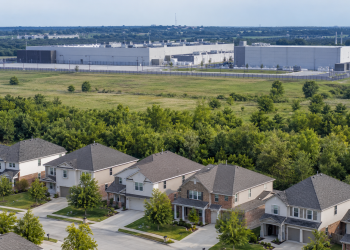
Data Center REITs And Infrastructure Economics explains how publicly traded data center real estate investment trusts (REITs) monetize critical digital infrastructure, what drives returns, and why power deliverability, leasing structure, and capital intensity shape the business.
Data centers look like real estate, but the economics are closer to infrastructure. Land and buildings matter, but power delivery, cooling capability, network connectivity, and long-term customer contracts are the real value drivers. That is why data center REITs are often evaluated differently than office or retail REITs.
This guide breaks down how data center REITs work, how they generate revenue, which costs matter most, and how AI-driven demand is changing infrastructure economics.
In One Sentence: Data Center REITs And Infrastructure Economics Is About Monetizing Power-Enabled Real Estate Through Long-Term Leasing, High Capex Builds, And Recurring Revenue Tied To Digital Demand
REIT performance depends on how effectively a platform can deliver scalable capacity, keep utilization high, and manage capital costs and power constraints.
What Is A Data Center REIT?
A data center REIT is a real estate investment trust that owns, develops, and operates data center properties and distributes a significant portion of taxable income to shareholders, consistent with REIT requirements.
Unlike many property types, data center REIT assets are both physical and operational. Their buildings are built around electrical and mechanical systems, network connectivity, and 24/7 operations, and those systems drive both capex and differentiation.
For a foundational primer on data centers and the major facility models, see what is a data center and hyperscale vs colocation vs edge data centers.
How Data Center REITs Make Money
Data Center REITs And Infrastructure Economics starts with revenue structure. Most REIT revenue comes from leasing space and power capacity to customers, plus ancillary services that support operations and connectivity.
1) Base rent and contract structure
REITs typically lease capacity through contracts that define term length, escalation clauses, and renewal options. Contract structure matters because it affects cash flow stability and the ability to reprice capacity as market conditions change.
2) Power and energy pass-throughs
Power is often a pass-through cost to customers, but the details vary. Some contracts include fixed components, some include variable pass-throughs, and some include blended pricing depending on the service model. The ability to price power-related services and manage energy exposure can materially affect margins.
For the power fundamentals behind why this matters, see data center electricity and why data centers use so much electricity.
3) Interconnection and cross-connect revenue
In network-dense facilities, cross-connects and interconnection services can be meaningful revenue drivers. This is especially true in colocation-focused assets where customers value the ability to connect to carriers and cloud on-ramps efficiently.
For the infrastructure context behind interconnection value, see fiber networks and data center interconnects explained.
4) Development profits and expansion phases
Some REITs create value by developing new capacity and leasing it up, then repeating that cycle. Expansion phases can improve returns if demand is strong and time-to-power is manageable.
Why Power Deliverability Shapes REIT Economics
REIT economics are constrained by one practical reality: you cannot lease what you cannot energize. Even if a market has demand, power deliverability determines when capacity can come online and how quickly utilization can grow.
Power deliverability is corridor-specific and depends on substations, feeders, transmission pathways, and upgrade timelines. It is not the same as “the region has enough generation.”
For how data centers interact with the grid, see data centers and the power grid and how utilities plan for data center growth.
How power constraints impact returns
- Delayed revenue: if energization slips, lease-up and cash flow slip
- Higher capex: upgrades and electrical infrastructure can raise build costs
- Market selection risk: constrained corridors can cap long-term expansion potential
- Pricing dynamics: scarcity can raise pricing, but only for deliverable capacity
Capex: Why Data Centers Are So Capital Intensive
Data center assets are capex heavy because the building is not the main cost driver. The electrical, mechanical, and network-ready infrastructure is the main cost driver, and those systems must be designed for reliability and scalability.
Major capex components typically include:
- utility interconnection, transformers, and switchgear
- UPS and backup generation systems
- cooling systems and heat rejection infrastructure
- distribution pathways to deliver power to customer space
- security and monitoring systems
For a practical explanation of backup power systems that drive capex, see backup power for data centers.
Opex: What It Costs To Operate A Data Center Platform
Operating expenses include staff, maintenance, security, utilities, and ongoing lifecycle replacement. Opex profiles vary by asset type, customer mix, and design choices.
Key opex drivers
- Staffing and operations: 24/7 monitoring, incident response, and maintenance
- Maintenance contracts: UPS, generators, chillers, and electrical gear
- Energy and cooling overhead: efficiency and peak demand patterns
- Taxes and insurance: asset location and risk profile factors
Efficiency metrics like PUE can influence both costs and customer narratives. For definitions, see PUE and WUE metrics explained.
Leasing Models: Colocation vs Hyperscale Economics
Data center REITs can have different customer mixes that materially change unit economics.
Colocation-heavy economics
Colocation often involves more customers, smaller deployments, and potentially higher interconnection revenue. It can also require more sales, support, and operational complexity because customer needs vary widely.
Hyperscale-heavy economics
Hyperscale leasing often involves fewer customers with large deployments and long-term contracts. Revenue can be more concentrated, and build-to-suit economics can look more like infrastructure projects with large capex commitments and staged delivery.
For a broader lens on how AI and cloud demand affects these facility models, see how AI and cloud drive data center growth.
AI Density Is Changing Infrastructure Economics
As AI workloads increase rack density, the economics shift. Higher density can help monetize space faster, but it also increases capex requirements for power delivery and cooling, and it can reduce flexibility if a facility is optimized for one type of workload.
Cooling choices are increasingly part of the financial model. Liquid cooling can raise near-term complexity and capex, but it can also enable leasing at densities that would otherwise be impossible.
For the liquid cooling shift, see why liquid cooling is increasing with AI demand.
Risks Investors Watch In Data Center REITs
Data Center REITs And Infrastructure Economics includes a risk lens because returns are not guaranteed. The major risks tend to cluster around constraints, concentration, and capital markets.
- Power constraint risk: inability to secure deliverable power in core corridors
- Customer concentration risk: revenue dependence on a small number of large tenants
- Capital cost risk: rising interest rates and cost of capital affecting development feasibility
- Technology shift risk: changes in cooling, density, and design standards
- Regulatory and community risk: permitting delays, emissions scrutiny, and land use disputes
Permitting and community posture can meaningfully affect timelines and project costs. For the approvals lens, see zoning and permitting for data centers.

Practical Checklist For Evaluating REIT Infrastructure Economics
Investors and operators often use a common checklist when evaluating data center REIT platforms and projects.
- Time-to-power: realistic energization timelines and expansion pathways
- Lease-up pipeline: signed demand versus speculative build risk
- Customer mix: colocation versus hyperscale concentration and churn profile
- Capex discipline: cost control, standardization, and procurement effectiveness
- Efficiency and sustainability posture: PUE, WUE, and renewable procurement narratives
- Market selection: corridors with durable demand and manageable permitting risk
Market selection is driven by the same siting fundamentals that shape all capacity. For a refresher, see why data centers are built in specific locations.
Authoritative External Resources On REITs And Market Structure
For readers who want standardized definitions and market context from authoritative sources, these references are useful starting points:
- U.S. SEC Investor.gov REIT overview for how REITs work at a basic level
- Nareit: What is a REIT for REIT structure and common terminology
- U.S. Energy Information Administration electricity data for electricity market context relevant to operating costs
FAQ: Data Center REITs And Infrastructure Economics
What is a data center REIT?
A data center REIT is a real estate investment trust that owns and operates data center properties and generates revenue primarily through leasing power-enabled capacity and related services.
How do data center REITs generate revenue?
They earn base rent from leases, often recover power costs through pass-through structures, and may generate additional revenue from interconnection services and development-driven expansion.
Why is power deliverability so important to REIT economics?
Because capacity cannot be leased until it is energized. Delays in interconnection or grid upgrades delay revenue and can raise capex, impacting returns.
Are colocation economics different from hyperscale economics?
Yes. Colocation typically involves more customers, potential interconnection revenue, and operational complexity, while hyperscale often involves fewer large tenants and long-term build-to-suit contracts.
How is AI changing data center REIT economics?
AI increases rack density and power demand, which can accelerate leasing and raise pricing, but it also increases capex requirements for power and cooling and can reduce design flexibility.
What are the biggest risks for data center REIT investors?
Key risks include power constraints, customer concentration, rising cost of capital, technology shifts such as liquid cooling, and permitting and community opposition risk.
Key Takeaway
Data Center REITs And Infrastructure Economics is an infrastructure story disguised as real estate. The strongest platforms are the ones that can deliver power-constrained capacity on schedule, structure leases to protect cash flow, control capex and opex, and expand in corridors where demand and permitting posture support long-term growth.