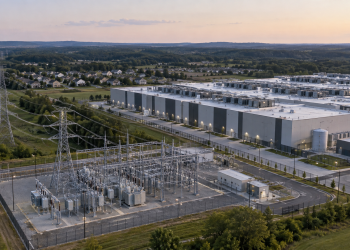
Grid reliability has become a defining issue for data centers as electricity demand expands, new AI workloads ramp up, and utilities rework infrastructure plans to keep power stable across regions.
Today’s facilities depend on consistent power and low interruption risk. Even short outages can cause service failures or cascading impacts across cloud applications, finance platforms, and mission critical workloads.
In One Sentence: Grid Reliability For Data Centers Means Assuring Continuous And Stable Electricity Supply
When grid reliability is strong, data centers can scale capacity, operate more efficiently, and meet uptime obligations without relying excessively on backup power.
Why Grid Reliability Matters To Data Centers
Data centers already consume significant electricity and those needs are increasing. AI clusters, GPUs, and cloud services are intensifying load density which magnifies reliability obligations for utilities and infrastructure operators.
Users expect hyperscale platforms to never go offline. That expectation forces operators to integrate diesel backup, redundant feeds, and advanced power management systems. For context, spare generation and UPS systems act as local insurance but they do not replace systemic grid reliability planning.
Our previous overview of how data centers draw power explains foundational concepts such as substations, backup systems, and network interconnects. See data centers and the power grid for more detail.
How Utilities And Grid Operators Define Reliability
Utilities and transmission system operators define reliability in two broad categories:
- Adequacy: having enough supply to meet load
- Security: maintaining system stability under stress events
Adequacy covers long range planning such as capacity additions, renewable integration, and peak demand forecasting. Security focuses on shorter horizon resilience such as equipment failures, storm impacts, and frequency disturbances.
Fast growing data center hubs such as Northern Virginia, Dallas, and Phoenix have forced grid operators to rebalance both adequacy and security considerations as demand accelerates.
Electricity Demand Growth And Load Shapes
AI clusters and cloud workloads influence load shapes differently than traditional commercial or residential demand. Continuous compute often resembles baseload rather than peaky or seasonal consumption.
That distinction changes how utilities plan new generation, transmission, and distribution. Longer term, reliable baseload demand can support renewable procurement or long duration storage if paired with consistent offtake contracts.
Our discussion of how utilities plan for data center growth details how interconnection studies and load forecasting shape long term investments.
Interconnection Queues And Transmission Constraints
New facilities must queue for interconnection studies before being granted capacity. These queues have grown as both renewable developers and data center operators compete for transmission access.
Transmission constraints contribute to reliability risk when congestion prevents power from moving between regions, especially during peak load or emergency events.
Several regions have started to explore coordinated planning frameworks to balance data center expansion against renewable additions.
Backup Power, Redundancy, And Reliability Insurance
Data centers typically integrate diesel generators, fuel storage, UPS systems, and redundant grid feeds. While these systems protect uptime, they do not remove the need for systemic grid reliability.
The use of diesel backup power is covered in backup power for data centers for readers seeking technical detail.
Regulatory, Market, And Regional Considerations
Grid reliability varies by region. Texas, for example, operates an independent grid with competitive market pricing. Other regions are operated through multi-state transmission organizations with capacity obligations and longer range planning requirements.
Operational impacts often extend beyond data centers. Municipalities and community groups weigh reliability, water, siting, and land use when evaluating new projects. For an overview of how states compete for investment, see why states compete for data center investment.
External Reliability Frameworks And Reporting
Independent organizations such as the North American Electric Reliability Corporation publish annual reliability assessments that evaluate risks associated with weather, fuel mix, transmission constraints, and infrastructure modernization.
Readers can review the latest assessments at NERC and policy analysis from the U.S. Energy Information Administration.

Future Outlook
Looking forward, data centers are expected to support increasing renewable procurement, new storage integration, and potentially flexible load participation to improve grid efficiency.
AI and cloud growth trends indicate that reliability will remain a strategic priority for utilities and operators for the next decade.
FAQ: Data Centers And Grid Reliability
Do Data Centers Improve Or Strain Grid Reliability?
They primarily increase load but can support reliability through long term procurement, renewables, and storage if properly coordinated.
Are Backup Generators A Substitute For Reliable Grids?
No. Backup systems protect local uptime but systemic reliability depends on utility infrastructure and transmission planning.
Which Regions Face The Most Reliability Pressure?
Fast growing markets with AI clusters or hyperscale footprints face the most pressure, especially where transmission capacity is limited.
Will AI Workloads Change Reliability Planning?
Yes. Higher load density and round the clock compute are influencing long term adequacy plans and infrastructure investments.
Key Takeaway
Grid reliability is fundamental to data center expansion. Utilities, regulators, and operators will increasingly coordinate planning decisions as workloads grow and electrification accelerates.