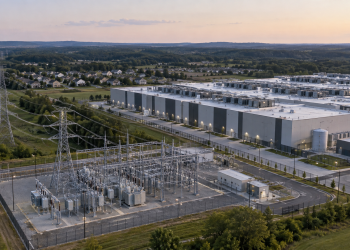
Heat reuse from data centers is gaining attention because nearly all electricity consumed by servers becomes heat. Traditionally, that heat is treated as a problem to be removed and rejected outside. Heat recovery flips the logic by capturing some of that thermal energy and putting it to work in buildings, district heating networks, industrial processes, or other nearby uses.
This article explains how data center heat reuse works, what makes a project viable, and why many sites still struggle to reuse heat at scale.
In One Sentence: Heat Reuse From Data Centers
Heat reuse from data centers captures waste heat from IT and cooling systems and transfers it through heat exchangers, often boosted by heat pumps, to support nearby heating needs such as district heating or building hot water.
Why Data Centers Generate So Much Reusable Heat
Data centers consume electricity to power servers, storage, and networking equipment. That electrical energy becomes heat during operation. Cooling systems exist to move that heat away and reject it to the outdoors, which is why cooling and electricity are tightly linked.
For foundational context, see why data centers use so much electricity and how data centers work. For cooling mechanics, see how data center cooling systems work.
What “Waste Heat” Means In Practice
Data centers typically produce what engineers call low-grade heat. That means the temperature is useful, but often not hot enough to serve common heating needs directly without additional steps.
Many heating applications, such as building heating loops or domestic hot water, require higher temperatures than the raw outlet temperature of typical data center air or water loops. That is why heat pumps frequently become part of the solution.
The Basic Heat Recovery Loop
Most heat recovery designs follow a similar pattern:
- Capture heat from a warm air stream or a warm liquid loop leaving servers.
- Transfer heat through a heat exchanger into a secondary loop.
- Boost temperature using a heat pump if higher temperatures are needed.
- Deliver heat to an end user such as a building loop, district heating network, or process load.
- Reject remaining heat through conventional systems when reuse demand is not available.
Heat recovery is not a full replacement for cooling. It is usually an additional pathway that reduces how much heat must be rejected outside during periods when there is a heat customer.
Common Heat Reuse Approaches
There are several ways to reuse data center heat. The best fit depends on location, climate, and the presence of nearby heat demand.
District Heating Networks
District heating uses a central heat network to supply multiple buildings. Data center heat can be injected into the network, often with heat pumps to meet the network temperature requirements.
This approach works best when a district heating system already exists or when a new development is building one. Without a network, the cost to build piping and heat exchange infrastructure can be the main barrier.
Heating Nearby Buildings
Some data centers recover heat to support nearby offices, campuses, warehouses, or multi-building developments. This can be simpler than district heating because the distance is shorter and the heat demand is under one owner or a small group.
Industrial Or Agricultural Uses
In some cases, recovered heat can support industrial processes, greenhouses, or other thermal loads that need steady heat. Viability depends on proximity, temperature needs, and how reliably the heat demand matches the data center output.
Domestic Hot Water Preheating
Even if recovered heat is not hot enough to meet final water temperatures, it can preheat water and reduce the energy needed from boilers or other systems.
What Makes Heat Reuse Viable
Heat reuse is often described as a sustainability win, but it is not automatic. Projects tend to succeed when several conditions align.
Proximity
Heat is expensive to move long distances. The most viable projects usually have a heat customer very close to the data center or are tied into an existing district heating network.
Matched Demand
Data centers produce heat year-round. Many heat customers need the most heat in winter. That seasonal mismatch can limit reuse unless there are year-round thermal loads or thermal storage strategies.
Temperature Requirements
If the receiving system needs high temperatures, more heat pump work is required. That increases electricity use, costs, and system complexity.
Commercial Structure
Someone must pay for the infrastructure, and someone must commit to buying the heat. Long-term contracts and clear ownership models are often essential.
How Heat Reuse Interacts With Electricity, Grid Planning, And Metrics
Heat pumps and additional pumping loads can increase electricity consumption, even if they reduce total emissions by displacing fossil heating. The net outcome depends on grid carbon intensity and how the receiving buildings are heated today.
For electricity context, see data center electricity and data centers and the power grid.
Heat reuse can also complicate simple facility metrics. PUE focuses on overhead, while heat reuse is an export of useful energy. A site can have a slightly higher electricity footprint due to heat pumps but still deliver strong net climate benefits if it displaces high-carbon heating. See PUE and WUE metrics.

Why Heat Reuse Is Not Universal
Even when the concept is appealing, several barriers limit adoption.
- Heat customers are not always nearby, especially for campuses located in industrial corridors.
- Upfront infrastructure costs for piping, exchangers, and heat pumps can be high.
- Seasonal mismatch means some recovered heat still must be rejected outside.
- Operational complexity increases, which can be a concern for reliability-focused facilities.
- Permitting and coordination across multiple stakeholders can slow delivery.
Local approvals and community negotiations can shape whether heat reuse is encouraged or required. See environmental review for data centers and zoning and permitting for data centers.
Practical Questions To Ask About A Heat Reuse Proposal
If a project claims it will reuse heat, these questions help verify feasibility:
- Who is the heat customer, and how far away is the connection point?
- What temperature does the customer require, and what heat pump work is needed?
- What share of annual heat output is expected to be reused?
- What happens when the heat customer does not need heat?
- Who owns the heat recovery infrastructure, and what contract terms exist?
- How will performance be measured and reported over time?
Authoritative References
For background on how heat pumps support low-temperature heat sources, see IEA heat pumps overview. For a broader perspective on district energy systems, see U.S. DOE district energy overview.
Summary
Heat reuse from data centers can convert waste heat into useful energy for district heating, nearby buildings, or industrial applications. Most projects rely on heat exchangers and often heat pumps because data center heat is typically low-grade. The strongest heat reuse opportunities occur when a steady heat customer is close, temperature needs are compatible, and commercial agreements support long-term infrastructure investment. Heat reuse is promising, but it is not universal, and claims should be evaluated with clear assumptions and measurable performance targets.
FAQ
Is Data Center Heat Hot Enough To Heat Buildings Directly?
Sometimes, but often it is not hot enough for typical heating systems without a heat pump. Many projects use heat pumps to raise temperatures to useful levels.
Does Heat Reuse Reduce A Data Center’s Electricity Use?
Not necessarily. Heat reuse may add electricity use for pumps and heat pumps. The benefit is usually reducing fossil fuel heating elsewhere, which can lower total emissions.
Why Do Many Data Centers Not Reuse Heat?
The biggest barriers are lack of nearby heat customers, high infrastructure costs, seasonal mismatch, and added operational complexity.
How Does Heat Reuse Affect PUE?
PUE measures facility overhead relative to IT energy and does not fully account for exporting useful heat. A site could have a similar or slightly higher PUE but still deliver net environmental benefits through heat reuse.
What Is The Best Use Case For Heat Reuse?
Sites near dense heat demand, such as urban districts with district heating or campuses with large year-round thermal loads, are often the best candidates.
Can Heat Reuse Be Required By Regulators?
In some places, authorities may encourage or require evaluation of heat reuse, especially where climate policy targets building heat emissions. Requirements vary by jurisdiction.