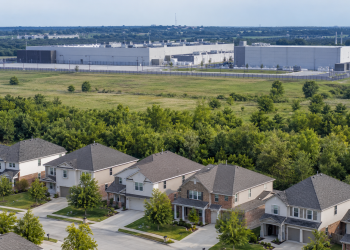
Infrastructure Financing Explained describes how large, capital-intensive projects are funded, why stable cash flow is the foundation of most financing structures, and how risks like permitting delays, power constraints, and cost overruns translate into higher cost of capital.
Infrastructure is expensive because it is long-lived and front-loaded. Most costs occur before the project produces value. Financing is the bridge between early capital needs and long-term cash flows, and the structure of that bridge determines whether a project is viable.
This guide explains the core financing concepts used in infrastructure, how capital stacks work, why project finance exists, and how these ideas apply to data centers, grid upgrades, and related enabling infrastructure.
In One Sentence: Infrastructure Financing Explained Means Matching Long-Term, Predictable Cash Flows With A Capital Stack Of Debt And Equity That Prices Risk Into The Cost Of Capital
Projects that can prove stable revenue and manage schedule and operational risk generally finance more cheaply and scale faster.
Why Financing Matters In Infrastructure
Infrastructure projects often have three characteristics that make financing central:
- High capex: large upfront capital requirements for construction and equipment
- Long timelines: years of permitting, procurement, and construction before revenue starts
- Long asset life: assets generate value for decades, so financing is structured for long horizons
Data centers share these characteristics, especially for high-power campuses and AI-ready builds. They also rely on enabling infrastructure like substations, transmission, fiber, and water systems that have their own financing realities.
For the capex and revenue model lens in data centers, see data center REITs and infrastructure economics.
Core Concepts: Debt, Equity, And The Capital Stack
Infrastructure Financing Explained usually starts with the capital stack, which is the mix of funding sources used to pay for a project.
Equity
Equity is the first-loss capital. Equity investors typically accept higher risk in exchange for higher expected return. They get paid after debt service and other obligations are met.
Debt
Debt is borrowed capital that must be repaid with interest. Because debt has priority over equity in repayment, it typically has lower required returns than equity, assuming the borrower can credibly manage risk.
Senior vs subordinated debt
Some projects use multiple layers of debt. Senior debt is repaid first and is often cheaper. Subordinated debt has higher risk and costs more, but it can help fill financing gaps when equity sponsors want to limit dilution.
Cost of capital
The overall cost of capital reflects what investors and lenders require given the project’s risks. If risks increase, required returns increase, and some projects stop being viable without incentives or contract changes.
Project Finance vs Corporate Finance
Infrastructure Financing Explained also requires understanding the difference between project finance and corporate finance.
Corporate finance
In corporate finance, a company raises debt or equity based on its overall balance sheet and credit profile. The lender relies on the company’s full cash flows and assets.
Project finance
In project finance, lenders primarily rely on the project’s cash flows and contracts. The financing is often “non-recourse” or “limited recourse,” meaning lenders have limited claims beyond the project itself.
Project finance is common when:
- the project is large relative to the sponsor’s balance sheet
- revenues can be contracted with credible counterparties
- risks can be allocated and controlled through contracts
- investors want ring-fenced risk exposure
What Lenders And Investors Underwrite
Financing decisions are driven by underwriting. Underwriting is the process of evaluating whether projected cash flows can reliably repay debt and produce acceptable returns.
Cash flow visibility
Stable, predictable revenue is the most valuable financing attribute. For data centers, this often means long-term leases, pre-leasing, or committed customer contracts.
Counterparty quality
Who is paying matters. Investment-grade tenants, sovereign counterparties, or strong enterprise customers can reduce perceived risk and improve financing terms.
Construction and schedule risk
Construction risk is one of the biggest drivers of financing cost. Delays can burn cash and push revenue out, increasing default risk.
Permitting and timeline uncertainty is a major schedule driver in many corridors. For the approvals lens, see permitting timelines for data centers.
Operating risk and reliability
Infrastructure must operate reliably for decades. For data centers, reliability expectations are high and supported by redundancy and backup power.
For the resilience layer, see backup power for data centers.
Regulatory and policy risk
Policy changes can affect incentives, electricity pricing, permitting rules, and community acceptance. Policy stability affects financing terms because investors price uncertainty.
For how incentives affect economics, see data center tax incentives explained.
How Power Constraints Affect Financing
Infrastructure Financing Explained is especially relevant in data centers because time-to-power can be the gating factor for revenue. If a project cannot be energized on schedule, it cannot deliver capacity, which can undermine contracted revenue and increase default risk.
Power deliverability depends on interconnection approvals, substation capacity, and upgrade timelines, and those timelines can be multi-year.
For grid fundamentals, see data centers and the power grid and how utilities plan for data center growth.
Financing implications of power risk
- Higher contingency reserves: more capital set aside to absorb delays
- Stricter covenants: tighter requirements on progress and liquidity
- Milestone-based funding: capital released only when upgrades and approvals are confirmed
- Higher pricing: lenders demand higher returns to compensate for uncertainty
Common Structures Used In Infrastructure Financing
Different projects use different structures depending on revenue model and policy environment.
Public-private partnerships (PPPs)
PPPs combine public and private roles in financing, building, and operating infrastructure. They can be used when public goals align with private execution capacity. PPP structures vary widely by country and sector.
Long-term contracted revenue
Revenue contracts, such as long-term leases or service agreements, are common in financing because they increase cash flow visibility. In data centers, committed leases and pre-leasing can support expansion phases and reduce speculative build risk.
Energy procurement contracts and PPAs
Renewable energy PPAs can support sustainability goals and provide longer-term pricing structure for energy procurement, depending on market design and contract terms.
For a data center view of PPAs, see renewable energy PPAs for data centers explained.
Government incentives and abatements
Incentives can improve after-tax project economics and increase financing feasibility. However, incentives generally do not remove core feasibility constraints like power deliverability or permitting posture.
For incentives and tradeoffs, see tax incentives for data centers economic impacts.

Practical Checklist For Evaluating A Financing Plan
Infrastructure Financing Explained should lead to clearer diligence. The checklist below highlights what sponsors and lenders typically validate early.
- Revenue basis: contracted tenants, forecasted demand, or regulated cost recovery
- Time-to-revenue: realistic construction and energization timelines
- Risk allocation: who bears construction, power, and policy risk
- Capital stack: debt, equity, and any subordinated components and their pricing
- Covenants and reserves: liquidity requirements and contingency planning
- Exit and refinance plan: stabilization pathway and long-term capital strategy
Common Misconceptions
Misconception: Financing is just getting a loan
Financing is structuring capital to match risk and cash flow. The structure, covenants, and pricing can determine whether a project is viable and scalable.
Misconception: Incentives guarantee financing
Incentives can improve economics, but lenders still require credible cash flow and manageable execution risk. Power and permitting constraints can still block financing.
Misconception: Project finance is always cheaper
Project finance can be efficient when contracts and risk allocation are strong, but it can be expensive if risks are uncertain or if cash flow visibility is weak.
Misconception: Power constraints are a construction problem only
Power constraints are a financing problem because they can delay revenue and increase default risk, leading to higher pricing and stricter covenants.
Authoritative External Resources On Financing And Risk
For readers who want credible baseline references on financing and risk concepts, these resources are useful starting points:
- U.S. SEC Investor.gov investing basics for foundational definitions related to investing and risk
- World Bank public-private partnerships for PPP concepts and frameworks
- OECD finance and investment for macro context on investment and capital markets
FAQ: Infrastructure Financing Explained
What is Infrastructure Financing Explained?
It is an overview of how large infrastructure projects are funded using debt and equity, how capital stacks work, and how risks affect cost of capital and feasibility.
What is a capital stack?
A capital stack is the mix of funding sources used to finance a project, typically including equity and one or more layers of debt, each with different risk and return expectations.
What is project finance?
Project finance is a structure where lenders primarily rely on the project’s contracted cash flows for repayment, often with limited recourse to the sponsor’s broader balance sheet.
Why do power constraints affect financing?
Because delays in energization delay revenue, increase carrying costs, and raise default risk. Lenders price this risk through higher rates, stricter covenants, and larger reserves.
How do incentives influence financing?
Incentives can improve project economics and support feasibility, but they rarely override core risks like time-to-power, permitting uncertainty, or weak contracted revenue.
What should sponsors validate first?
Validate contracted revenue or credible demand, realistic time-to-power and permitting timelines, risk allocation, and the full cost of capital implications of the capital stack.
Key Takeaway
Infrastructure Financing Explained is about converting long-term infrastructure value into fundable cash flows. The projects that finance best are those with clear revenue contracts, realistic schedules, disciplined risk allocation, and credible plans for power deliverability and approvals. When power and permitting risks are unmanaged, financing becomes more expensive and projects become harder to build at scale.