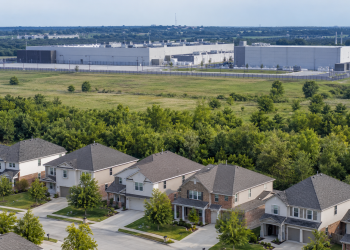
International Competition For Capacity is increasing as countries and regions race to attract data center investment that supports cloud growth, AI workloads, national digital strategies, and in-country control over critical infrastructure.
Data centers are no longer treated as generic real estate projects. In many places they are treated as strategic infrastructure, similar to ports, industrial parks, or energy corridors. That framing changes how governments approach permitting, incentives, grid planning, and regulatory posture.
This guide explains why countries compete for data center capacity, what policy levers they use, what constraints often prevent “winning” from translating into built megawatts, and how to evaluate competition claims realistically.
In One Sentence: International Competition For Capacity Is A Race To Secure Cloud And AI Infrastructure, But Power Deliverability, Approvals, And Connectivity Decide What Actually Gets Built
Announcing ambition is easy. Delivering energized capacity requires a corridor where power, land, networks, and permitting align on a real schedule.
Why Countries Want Data Center Capacity
International Competition For Capacity is not only about technology prestige. Governments often pursue data center projects because they believe the infrastructure supports broader economic and strategic goals.
1) Digital economy enablement
Data centers support cloud services, digital public services, e-commerce, fintech, media, and enterprise modernization. A stronger local infrastructure base can reduce latency and improve service performance for domestic users.
For the demand engine behind new capacity, see how AI and cloud drive data center growth.
2) AI competitiveness and compute sovereignty
AI workloads increase the strategic value of compute. Some countries want in-region or in-country GPU capacity to support domestic innovation, research, and industrial modernization.
3) Data residency, sovereignty, and regulated workloads
Governments and regulated industries often require certain workloads to stay within specific jurisdictions. This creates demand for local cloud regions and sovereign environments, which in turn increases local data center build-outs.
For the compliance angle, see sovereign cloud and compliance trends.
4) Infrastructure-led investment narratives
Data center projects can involve large construction budgets and long-term tax bases. They can also pull in supporting investment, such as fiber, substations, and renewable energy development.
For the economic development logic behind competition, see why states compete for data center investment.
What Countries Compete On In Practice
International Competition For Capacity typically centers on five categories of “competitiveness,” even if public messaging emphasizes only one.
1) Time-to-power and grid readiness
Power deliverability is the most decisive factor for many projects. Some countries have strong generation capacity but lack transmission or distribution readiness in the specific corridors where projects want to build. Others have targeted upgrades and planning processes that accelerate delivery.
For the foundational grid relationship, see data centers and the power grid.
For how utilities and planners handle fast-growing load, see how utilities plan for data center growth.
2) Permitting and approvals predictability
Speed matters, but predictability matters more. Operators prefer jurisdictions where requirements are clear, timelines are realistic, and mitigation expectations are knowable early in a project.
For the approvals framework, see zoning and permitting for data centers and permitting timelines for data centers.
3) Connectivity and interconnection ecosystems
Even power-rich sites can fail if they cannot support competitive carrier options and resilient routes. Mature connectivity ecosystems enable faster customer acquisition and better performance for cloud and enterprise workloads.
For connectivity fundamentals, see fiber networks and data center interconnects explained.
4) Incentives and fiscal policy
Incentives can improve project economics, but they usually do not overcome grid constraints. The most effective incentives accelerate projects that are already feasible, rather than forcing feasibility where fundamentals are weak.
For the incentive structures and tradeoffs, see data center tax incentives explained.
5) Sustainability and procurement pathways
Many operators have carbon targets and customer-driven sustainability requirements. Countries that enable renewable procurement, credible claims, and grid decarbonization pathways can be more attractive, especially for hyperscalers and large colocation providers.
For a procurement overview, see renewable energy PPAs for data centers explained.
Why Some “Winners” Still Do Not Deliver Built Capacity
International Competition For Capacity often produces ambitious announcements, but not all announced projects become energized facilities on schedule. The most common failure mode is underestimating constraints.
Constraint 1: Local power delivery bottlenecks
Even in countries with high generation capacity, interconnection constraints can delay projects for years. Transformers, switchgear, and transmission upgrades have long lead times, and the corridor-level grid may not be designed for sudden, large industrial load growth.
For the electricity load context, see why data centers use so much electricity and data center electricity.
Constraint 2: Land use conflicts and community opposition
Large facilities can trigger public scrutiny about land use, noise, generators, and resource impacts. Opposition can slow approvals and increase mitigation costs.
For common patterns of pushback, see community opposition to data centers.
Constraint 3: Cooling and water narratives
In water-stressed regions, cooling strategy can become a gating issue. Even where water is available, public perception can turn water use into a permitting and reputation risk.
For foundational context, see why data centers use water.
Constraint 4: Workforce and operational maturity
Building and operating high-availability data centers requires specialized skills. In emerging markets, operators may need to build training pipelines or import expertise, which can affect time-to-operate and cost structure.
How Competition Is Changing With AI
AI workloads are changing what “capacity” means. It is not just more square footage. It is more power density, more cooling capability, and more specialized infrastructure for GPU clusters.
That shift raises two implications for international competition:
- Power becomes even more decisive: AI density increases MW per site and accelerates corridor constraints
- Cooling readiness becomes a differentiator: markets with liquid cooling capability and supply chains can deliver AI-ready space faster
For the cooling shift tied to AI density, see why liquid cooling is increasing with AI demand.
Practical Framework To Evaluate A Country’s Competitiveness
International Competition For Capacity is best evaluated with a simple diligence framework. The goal is to separate marketing claims from deliverable realities.
- Time-to-power: are interconnection pathways and upgrade timelines credible?
- Permitting clarity: are land use pathways predictable and replicable?
- Connectivity depth: does the corridor have carrier diversity and route resilience?
- Industrial site availability: can projects assemble large parcels with manageable risk?
- Policy stability: are incentives and rules stable enough for long-term investment?
- Operational ecosystem: is there local expertise for high-availability operations?
For the underlying siting fundamentals that apply globally, see why data centers are built in specific locations.
Common Misconceptions
Misconception: Incentives are the main reason projects choose a country
Incentives can influence economics, but power deliverability and approvals typically determine feasibility. Incentives rarely overcome infrastructure constraints.
Misconception: A country can “declare” itself a data center hub
Hub status emerges from sustained delivery: energized capacity, connectivity ecosystems, and repeatable permitting pathways that reduce uncertainty for developers.
Misconception: Competition is only about hyperscalers
Hyperscalers matter, but colocation providers, enterprises, and sovereign programs also drive demand. Many markets grow first through enterprise and carrier ecosystems before hyperscale scales significantly.
Misconception: Sustainability claims are easy to validate
Sustainability positioning depends on credible procurement pathways, measurable efficiency, and grid realities. Claims must be backed by evidence and transparent accounting.

Authoritative External Resources On Policy And Investment
For readers who want standardized definitions and macro policy context, these references are useful starting points:
- World Bank Data for standardized economic and infrastructure indicators that support investment analysis
- OECD for policy and economic research relevant to investment climates and industrial strategy
- International Energy Agency for energy system context that influences power deliverability and decarbonization pathways
FAQ: International Competition For Capacity
What does International Competition For Capacity mean?
It refers to countries and regions competing to attract data center investment and cloud and AI infrastructure, using policy, incentives, infrastructure upgrades, and regulatory positioning.
What is the most important factor in winning data center projects?
Deliverable power on a realistic timeline is often the top factor, followed by permitting predictability and connectivity ecosystem depth.
Do incentives guarantee a country will get data center investment?
No. Incentives can improve economics, but they usually cannot overcome grid constraints, permitting uncertainty, or weak connectivity.
How does AI change international competition?
AI increases power density and cooling requirements, which makes power deliverability and cooling readiness even more decisive in determining where capacity can be deployed.
Why do some announced projects not get built?
Common reasons include interconnection delays, permitting and community opposition, equipment lead times, and changes in demand or financing conditions.
How can I evaluate whether a market is truly competitive?
Look for evidence of energized capacity delivery, utility upgrade plans, repeatable permitting outcomes, carrier diversity, and stable policy frameworks over multiple projects.
Key Takeaway
International Competition For Capacity is intensifying as cloud and AI demand expands, but the winners are not determined by ambition alone. The markets that consistently deliver capacity are the ones that solve time-to-power, approvals predictability, and connectivity depth, while managing community and sustainability expectations with measurable, credible commitments.