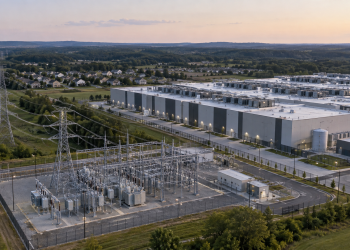
Renewable energy and PPAs for data centers have become central to how operators manage the emissions tied to electricity consumption. Because data centers draw large, continuous power, many companies use renewable procurement to reduce Scope 2 emissions and to signal long-term demand for clean generation.
This guide explains what PPAs are, how they differ from RECs and utility green programs, and how to evaluate claims in a practical, non-technical way.
In One Sentence: Renewable Energy And PPAs For Data Centers
Renewable energy and PPAs for data centers use contracts and energy attributes to match electricity consumption with renewable generation, but the real impact depends on structure, timing, location, and additionality.
Why Data Centers Focus On Renewable Energy Procurement
Data centers are large electricity users, and electricity is often the biggest driver of operational emissions. Even when facilities improve efficiency, total demand can rise as cloud and AI workloads grow.
For demand fundamentals, see data center electricity and why data centers use so much electricity. For grid infrastructure constraints that shape procurement options, see data centers and the power grid.
What A PPA Is And Why It Matters
A power purchase agreement (PPA) is a long-term contract to buy electricity from a specific generation project, often wind or solar. PPAs can help finance new renewable projects by providing revenue certainty over many years.
In plain terms, a PPA is usually about two things:
- Energy: the electricity produced by a renewable project.
- Attributes: the environmental “claim” associated with that electricity, often documented through renewable energy certificates (RECs).
The Main Types Of PPAs Used By Data Centers
There are several PPA structures. The right choice depends on where the data center is located, what the local utility offers, and how the operator manages price and risk.
Physical PPA
A physical PPA means the buyer receives electricity delivered through the grid to their load, typically within the same market or region. This structure is more common when a buyer has access to wholesale markets or can arrange delivery through a utility or retail supplier.
Virtual PPA (Financial PPA)
A virtual PPA (often called a VPPA) is a financial contract rather than a direct delivery of power to the facility. The renewable project sells electricity into the grid, and the buyer settles financially based on an agreed strike price. The buyer typically receives the RECs, which supports emissions accounting claims.
VPPAs are popular because they can be executed even when the data center cannot physically take delivery from a specific project.
Utility Green Tariffs And Renewable Programs
Some utilities offer green tariffs or renewable subscription programs that allow large customers to procure renewable energy through the utility. This can be simpler operationally, but program details vary widely and may depend on the utility’s ability to source new renewable projects.
RECs Explained In Plain Language
Renewable energy certificates (RECs) represent the environmental attributes of renewable electricity generation. In many markets, buying RECs is the mechanism that allows a company to claim renewable energy use for accounting purposes.
Two important nuances:
- Unbundled RECs can be purchased separately from electricity and are often used to match emissions claims without changing physical power supply.
- Bundled RECs come with the electricity from a specific renewable project, often under a PPA or green tariff.
RECs can support legitimate accounting, but they are not all equal in perceived impact. Stakeholders often look for “higher quality” claims tied to additionality and local relevance.
Additionality, Location, And Time Matching
Renewable energy claims are increasingly judged on three dimensions that go beyond a simple annual REC match.
Additionality
Additionality asks whether the procurement helped create new renewable generation that likely would not have been built otherwise. Long-term PPAs are often viewed as stronger on additionality than spot purchases of unbundled RECs, though outcomes vary.
Location
Location matters because grids differ. Procuring renewable attributes in a far-away region may not reduce the grid emissions where the data center actually operates. Many operators try to align procurement with the same grid region as their load when feasible.
Time Matching (Hourly Matching)
Traditional reporting often matches annual electricity use with annual renewable attributes. Hourly matching aims to align renewable generation with consumption hour by hour, which is more demanding but can be more representative of real-time grid impact.
If you track efficiency and sustainability metrics, see PUE and WUE metrics for how resource intensity is commonly communicated.
How Renewable Procurement Interacts With Data Center Operations
Renewable procurement does not replace the need for reliability engineering. Data centers still require firm power, and during outages they often rely on backup systems.
For uptime context, see backup power for data centers. For cooling-related electricity drivers, see how data center cooling systems work.
Some operators also explore operational flexibility, such as shifting non-urgent workloads to regions or hours with cleaner energy supply. This can complement procurement but depends on workload design and contractual obligations.
Common Misconceptions About Renewable Energy And PPAs For Data Centers
- “A PPA means the data center runs only on wind or solar.” The facility still draws from the grid in real time. The PPA supports renewable generation and provides energy attributes for accounting.
- “RECs are always meaningless.” RECs are a recognized accounting instrument, but the impact varies based on whether they are bundled, additional, and locally relevant.
- “Efficiency does not matter if renewables are purchased.” Efficiency still reduces total demand, which can lower grid stress and infrastructure needs.
- “Renewables solve backup power needs.” Renewables can reduce emissions over time, but standby power requirements are about immediate reliability during disruptions.

Practical Checklist For Evaluating A Data Center Renewable Claim
- What instrument is used? PPA, VPPA, green tariff, bundled RECs, or unbundled RECs.
- Is it additional? Does it support new generation or a new project build-out.
- Is it local? Is the project in the same grid region as the data center load.
- How is it matched? Annual matching versus hourly matching or other time-based approaches.
- How is it verified? Third-party tracking systems and clear reporting boundaries.
Authoritative References
For deeper background on corporate renewable procurement and PPAs, see NREL corporate renewable procurement. For general renewable electricity and tracking concepts, the U.S. Energy Information Administration provides baseline explanations at EIA renewable energy explained.
Summary
Renewable energy and PPAs for data centers are procurement tools that can reduce reported Scope 2 emissions and, in many cases, help finance new renewable generation. The credibility of a claim depends on contract structure, additionality, location, and time matching. Strong procurement strategies pair renewable contracting with efficiency improvements and clear reporting, while maintaining the reliability systems required for uptime.
FAQ
What Is A PPA In The Context Of Data Centers?
A PPA is a long-term agreement to buy electricity from a renewable project, often paired with RECs that allow renewable energy claims for emissions accounting.
What Is The Difference Between A Physical PPA And A Virtual PPA?
A physical PPA involves delivery of electricity to the buyer through the grid, while a virtual PPA is a financial contract where the project sells power into the market and the buyer settles financially and receives RECs.
Do Renewable Energy Purchases Reduce A Data Center’s Actual Grid Consumption?
No. The data center still draws electricity from the local grid in real time. Renewable procurement supports renewable generation and affects accounting and market signals, not the physical electrons at the meter.
Are Unbundled RECs Enough For A Strong Sustainability Claim?
They can meet certain accounting requirements, but stakeholders often view bundled RECs, PPAs, and local projects as stronger because they may better support additionality and local grid impact.
How Do PPAs Relate To Reliability And Backup Power?
PPAs address energy procurement and emissions accounting. Reliability still depends on grid infrastructure and on-site resilience systems like UPS and generators.
What Should I Look For In A Credible Renewable Energy Statement?
Clear disclosure of the instrument used, the location of the project, whether the procurement is additional, how matching is done over time, and how claims are verified and reported.