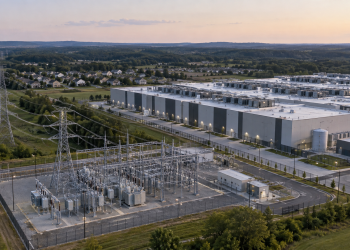
Why data centers test diesel generators is mostly about reliability: proving that backup power will start instantly and run predictably when utility power is interrupted. Data centers turn electricity into computing, and even brief power disruptions can break online services people rely on every day. Generator testing is the routine discipline that makes “backup power” more than a promise on a brochure.
It also helps to be precise about what “testing” means. A test is planned, limited, and governed by permit conditions. It is not the same thing as an emergency event, and it does not automatically signal a failing grid. It is a readiness check designed to confirm that mechanical equipment, controls, and safety systems will behave correctly under stress.
If you want the baseline mechanics first, read how data centers work. If your main concern is what happens during outages and why diesel is still common, see backup power for data centers.
Data Centers Test Diesel Generators in One Sentence
Data centers test diesel generators to verify that emergency power systems can start fast, stabilize power quality, and carry critical loads reliably when the primary utility supply fails.
Why Data Centers Test Diesel Generators
Backup power is a core design assumption in modern data centers. Utility grids are generally reliable, but outages still happen due to storms, equipment failures, transmission events, and planned maintenance. A data center cannot “hope” a generator works; it has to know.
That is why testing focuses on the full chain: the engine itself, fuel delivery, batteries and starters, control systems, automatic transfer switches, and monitoring alarms. The goal is to catch issues during a controlled, documented run rather than during an unplanned outage when stakes are higher.
This reliability mindset also shows up in how facilities are planned at the grid level. If you are tracking infrastructure impacts, data centers and the power grid explains how large loads and resilience requirements influence utility planning.
What “Generator Testing” Actually Means
Not all tests are the same, and the details matter for what neighbors experience. Many facilities perform short “exercise” runs intended to keep equipment healthy and confirm it starts cleanly. Other tests are more demanding and are designed to prove the generators can carry meaningful electrical load without overheating, unstable voltage, or control faults.
In practical terms, testing often includes:
- Start-and-run checks to verify the engine starts, warms, and holds steady operating conditions
- Transfer checks to confirm switches and controls move loads safely between utility and backup power
- Load validation using facility load or dedicated load banks to simulate real demand
- Monitoring verification so alarms, sensors, and reporting behave as intended
Testing requirements also tend to be shaped by standards and permitting frameworks. One widely referenced benchmark for emergency power system performance is NFPA 110, which outlines expectations for emergency and standby power systems in many facility contexts.
Noise, Smoke, and Emissions
The two impacts communities notice most are sound and exhaust. Diesel engines can be loud, especially under load, and they produce visible exhaust under certain conditions. Good designs reduce these impacts with acoustic enclosures, mufflers, site layout choices, and operational procedures that limit how disruptive tests feel in practice.
Noise concerns are often easier to understand than the electrical engineering behind backup systems, so communities tend to focus there. If you want the practical “what should I expect” explanation, data center noise explained walks through why noise happens and what mitigation typically looks like.
Emissions are regulated through federal and state frameworks and through site-specific air permits. At the federal level, the U.S. Environmental Protection Agency maintains stationary engine rules and compliance guidance that govern how engines are classified and operated. In certain jurisdictions, additional state-level rules apply; for example, California’s Air Resources Board maintains specific requirements aimed at reducing emissions from stationary diesel engines.

Permitting and Transparency
Generator testing is not just an operational choice; it is a compliance topic. Most data centers with diesel backup power operate under air permits that define allowable operating conditions and documentation requirements. These permits can influence test timing, test duration, maintenance procedures, and reporting.
If you want a plain-language look at the approvals and oversight that typically apply, data center diesel generator permitting breaks down the permitting logic and what it often covers.
For residents who want to verify what has been approved (and what has not), local filings are usually the most reliable source. Public records for data center development explains how to find the documents that matter and what to look for.
What Generator Testing Does (and Does Not) Signal
When people see or hear a generator test, it is easy to assume something is wrong. Most of the time, the opposite is true: testing is evidence that a facility is maintaining readiness. It does not automatically mean the grid is unstable, and it does not mean the generators will run continuously.
What it does signal is that the data center treats uptime as a critical engineering requirement and backs that requirement with routine validation. In high-density facilities, that reliability posture is paired with strict controls on cooling, electrical distribution, and monitoring to reduce the probability of service disruption.
Frequently Asked Questions
How often do data centers test diesel generators?
Testing frequency varies by facility, permit conditions, and internal reliability practices. Many sites run routine tests on a regular cadence to ensure engines, controls, and transfer equipment remain ready. The important takeaway is that tests are planned and documented, not random.
Do generator tests mean the power grid is failing?
No. Generator testing is preventative maintenance and readiness verification. It happens even in regions with strong grid reliability. If you want the broader context for how large loads affect planning and reliability, see how utilities plan for data center growth.
Are emissions from testing regulated?
Yes. Generator operation is typically governed by air regulations and site-specific permits, which define operating conditions and compliance requirements. The exact rules depend on engine type, location, and how the generator is classified under applicable regulations.
Why use diesel at all if cleaner options exist?
Diesel remains common because it can start quickly, deliver high power, and sustain operation reliably for extended outages. Many operators are adding batteries or exploring lower-emission alternatives, but diesel backup is still widely used for long-duration resilience. For a deeper overview, see backup power for data centers.
What should I ask if I live near a data center?
Ask about the testing schedule, the hours when tests are allowed, what noise mitigation is installed, what emissions controls are in place, and how compliance is monitored. If you want a broader lens on nearby impacts beyond generators, what happens when a data center is built near you is a useful starting point.
For more detail on the regulatory frameworks that influence testing practices, you can reference the U.S. EPA’s stationary engine rules and Clean Air Act overview, NFPA’s overview of NFPA 110, and California’s stationary diesel ATCM program pages.
U.S. EPA: Understanding the Stationary Engines Rules
U.S. EPA: Overview of the Clean Air Act and Air Pollution
NFPA: An Overview of NFPA 110
CARB: Stationary Diesel ATCM