Data center transmission lines are becoming an increasingly important part of the infrastructure conversation surrounding Data center transmission lines are becoming an increasingly important part of the infrastructure conversation surrounding new hyperscale and AI facilities.
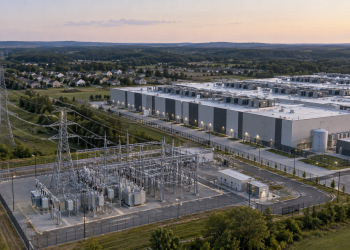
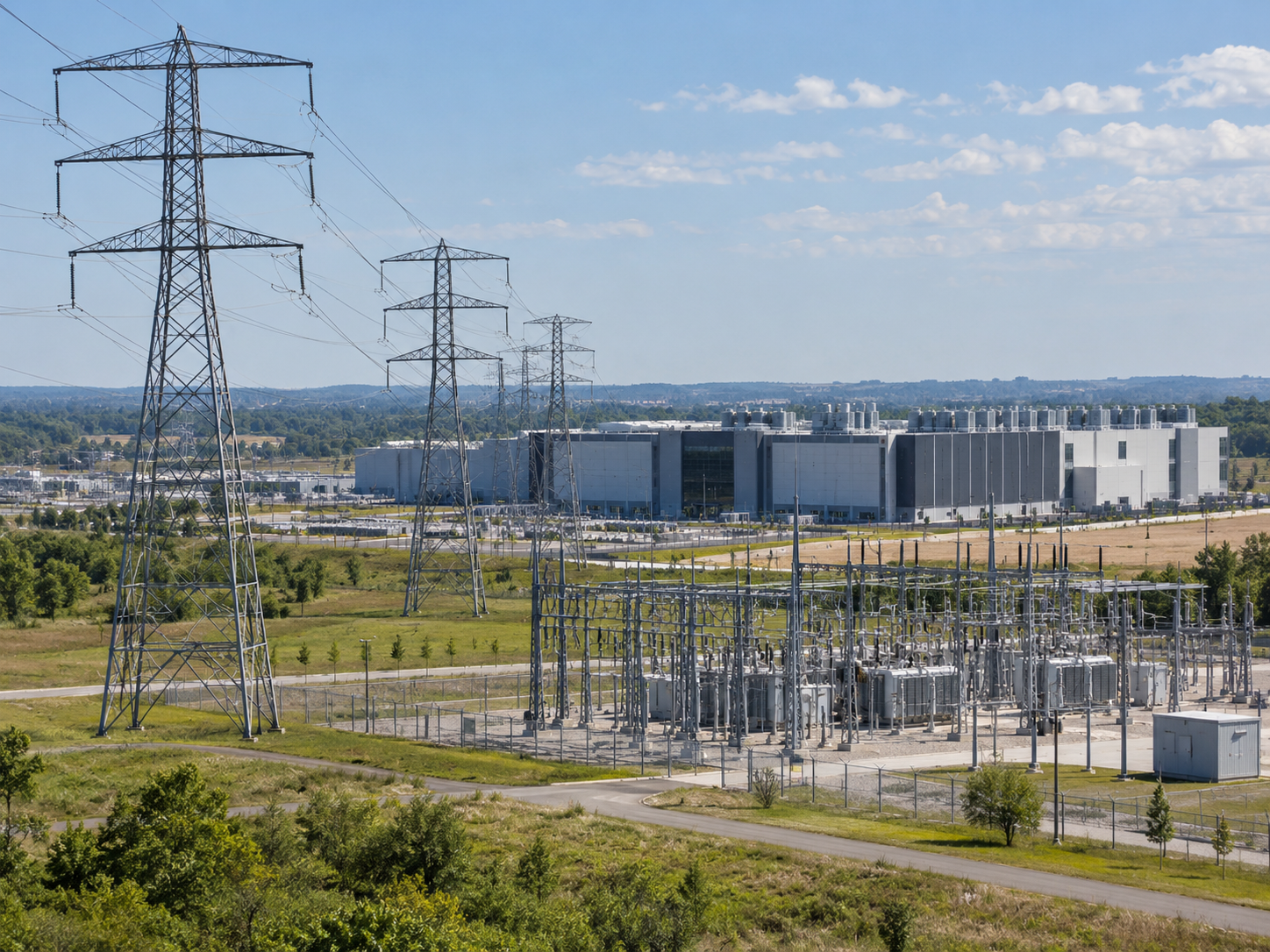
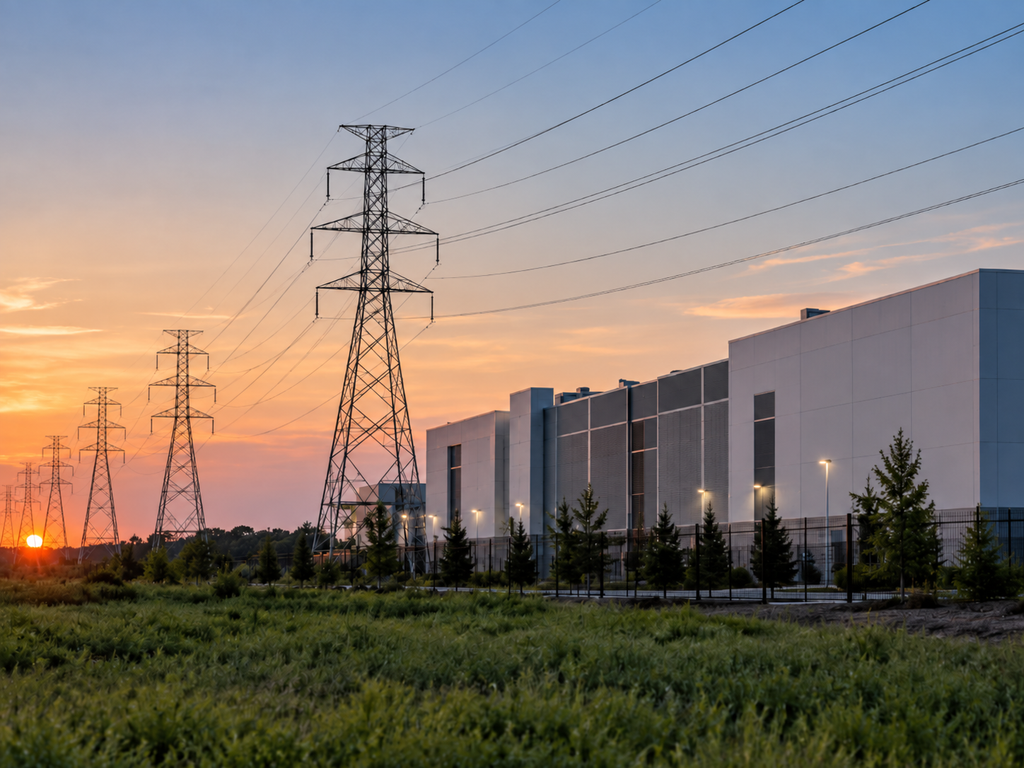
A data center can sit next to an existing transmission line and still require a new line, upgraded substation, additional transformers or other major electrical improvements.
Why?
Because being close to electricity infrastructure does not necessarily mean that infrastructure has enough unused capacity to serve a new facility.
For large data centers requesting hundreds of megawatts of electricity, the difference between power being nearby and power actually being available can determine whether a project opens on time—or is delayed for years.
Why Data Center Transmission Lines Are Needed
Electricity typically reaches a data center through several layers of infrastructure:
- Electricity is generated.
- High-voltage transmission lines move it across long distances.
- Substations transform voltage and route electricity.
- Distribution lines or dedicated feeders carry electricity toward the site.
- The data center’s transformers and electrical systems distribute power throughout the facility.
Our guide to data centers and the power grid explains this entire process in more detail.
Smaller data centers may be able to connect using existing infrastructure.
Large hyperscale and AI projects are different.
Some proposed campuses anticipate electricity demand measured in hundreds of megawatts. At that scale, a project can exceed the available capacity of nearby electrical infrastructure.
The U.S. Department of Energy specifically identifies rapidly growing loads from data centers among the reasons additional transmission infrastructure is needed in its 2026 National Transmission Needs Study.
A Nearby Transmission Line Does Not Mean Power Is Available
This is one of the most important concepts for understanding data center transmission lines.
Imagine a transmission line as a highway.
A highway may pass directly beside a proposed development, but that doesn’t mean it has unlimited capacity for thousands of additional vehicles.
Electrical transmission infrastructure works similarly.
Utilities must evaluate:
- Existing electricity demand
- Available transmission capacity
- Substation capacity
- Transformer capacity
- Voltage conditions
- Reliability requirements
- Other proposed large loads
- Future electricity demand
A site can therefore appear ideal on a map while still requiring substantial grid investment.
This problem is closely related to the existing data center substation and transformer bottleneck. A transmission line may have adequate capacity while the local substation does not—or the necessary transformers may take years to procure.
How Much Electricity Can a Large Data Center Require?
Data center power requirements vary dramatically.
A smaller facility may use only several megawatts.
Large facilities can require:
- Tens of megawatts
- 100 MW or more
- Several hundred megawatts across a campus
- In some announced projects, eventual campus capacity approaching or exceeding 1 GW
One gigawatt equals 1,000 megawatts.
This scale helps explain why data center transmission lines have become a much larger planning issue.
Berkeley Lab’s United States Data Center Energy Usage Report: 2025 Update estimates that U.S. data centers could account for approximately 11.8% of total U.S. electricity use by 2030 in its reference case, with modeled scenarios ranging from 9.5% to 15.3%.
For the demand side of this equation, see our guide explaining why data centers use so much electricity.
What Electrical Upgrades Can a Data Center Require?
A new transmission line is only one possibility.
New Transmission Lines
A utility may need additional high-voltage infrastructure to move more electricity into an area.
Existing Transmission Line Upgrades
Existing lines may sometimes be rebuilt or upgraded to carry additional power.
New or Expanded Substations
Substations transform voltage and route electricity through the grid.
A large data center can require:
- A completely new substation
- Additional transformers
- New breaker positions
- Expanded bus capacity
- New protection systems
New Transformers
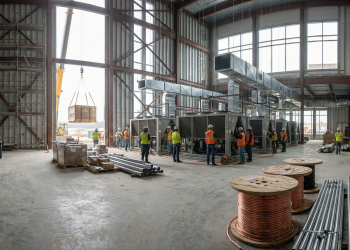
Large power transformers are particularly important because they can become long-lead equipment.
Our analysis of the data center substation and transformer bottleneck explains why a project can have electricity nearby yet still wait years for usable capacity.
New Feeders
Utilities may also need new circuits connecting a substation to the data center.
Upstream Grid Improvements
Sometimes the bottleneck is not directly beside the project.
A data center can trigger improvements elsewhere in the transmission system if upstream infrastructure cannot reliably support the additional load.
Why AI Is Increasing Demand for Transmission Infrastructure
AI data centers can concentrate enormous amounts of computing hardware into individual facilities.
Modern GPU clusters require electricity for:
- GPUs
- CPUs
- Networking
- Storage
- Pumps
- Fans
- Cooling equipment
- Power conversion
- Supporting infrastructure
The more electricity servers consume, the more heat must also be removed.
Our guide to how data centers work: power, cooling and networks explains how these systems work together.
Efficiency is often measured using Power Usage Effectiveness. Our guide to PUE and WUE metrics explains how electricity and water efficiency are measured.
Why Can’t Data Centers Simply Generate Their Own Power?
Some developers are increasingly considering:
- Natural-gas generation
- Fuel cells
- Batteries
- Renewable generation
- Microgrids
- Other onsite energy systems
That does not automatically eliminate the need for data center transmission lines.
Large facilities place a very high value on electricity reliability and often maintain multiple layers of power infrastructure.
Onsite generation may supplement utility service rather than replace it entirely.
Who Pays for Data Center Transmission Lines?
There is no universal answer.
Cost responsibility can depend on:
- State regulation
- Utility tariffs
- Regional transmission rules
- Interconnection agreements
- Infrastructure ownership
- Whether the upgrade primarily serves one customer or the wider grid
Some infrastructure may be directly funded by the data center developer.
Other improvements may eventually become part of broader utility investments.
That makes one question especially important for communities:
Who ultimately pays for the infrastructure needed to serve the data center?
Residents should request specific information about:
- Expected peak demand
- Full-build-out demand
- Transmission upgrades
- Substation construction
- Estimated infrastructure cost
- Cost allocation
- Construction timeline
Our data center town hall questions guide includes additional questions residents can use during public hearings.
How Can Data Center Transmission Lines Affect Communities?
Potential effects include:
- New utility rights-of-way
- Transmission towers or poles
- New substations
- Vegetation clearing
- Construction activity
- Utility easements
- Changes to views
Not every project has the same impact.
Some electrical improvements take place entirely within existing utility corridors or industrial areas.
Others can extend miles beyond the data center property.
That is one reason transmission infrastructure can become part of broader community opposition to data centers.
Frequently Asked Questions
What are data center transmission lines?
Data center transmission lines are high-voltage electrical lines used as part of the grid infrastructure supplying large data center loads.
Why do data centers need new transmission lines?
New lines can be needed when the existing transmission system does not have enough capacity to reliably deliver the facility’s requested electricity.
Does every data center need new transmission lines?
No. Some facilities can use existing electrical infrastructure.
Why do data centers need substations?
Substations transform voltage and route electricity between transmission infrastructure and the systems serving the data center.
Can transmission construction delay a data center?
Yes. Engineering, permitting, equipment procurement and construction can all affect when a facility receives power.
Bottom Line
Data center transmission lines are becoming increasingly important because modern data centers can add extraordinary amounts of electricity demand at one location.
A transmission line running beside a property does not mean hundreds of megawatts are available.
Utilities must determine whether transmission lines, substations, transformers and other infrastructure can reliably support the load.
As AI and hyperscale development expands, understanding those grid requirements will become increasingly important for developers, utilities and the communities where these facilities are built.