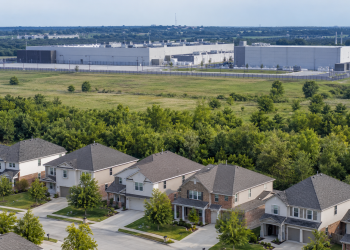
Why states compete for data center investment is not a mystery when you look at the scale of capital involved. A single large data center campus can represent hundreds of millions or even billions of dollars in construction and equipment, plus long-term demand for power, fiber, and specialized services.
At the same time, the competition is controversial. Data centers are capital-intensive but not always job-intensive, and the infrastructure upgrades they require can become a public debate. This article explains what drives the competition, what incentives states use, and how to evaluate real economic value.
In One Sentence: Why States Compete For Data Center Investment
Why states compete for data center investment is that data centers bring large capital spend and potential tax base growth, but states must balance incentives, grid and water constraints, and community impacts.
What States Are Actually Competing For
Data center projects are often awarded through a site selection process that compares multiple states and regions. The operator is optimizing for reliability, speed, and total cost of ownership, not just land price.
States are competing for:
- Capital investment in buildings, electrical gear, cooling systems, and IT hardware.
- Long-term taxable base where equipment and improvements are assessed, depending on local rules.
- Construction activity that benefits contractors, engineering firms, and suppliers.
- Cluster effects that attract related businesses such as fiber, security, and facilities services.
To understand how data centers function and why infrastructure matters, see how data centers work and why data centers are built in specific locations.
The Three Drivers That Make States Compete So Aggressively
Many industries can relocate, but data centers have especially strong location constraints. The competition intensifies because the set of viable sites is limited, and first movers can create durable clusters.
1) Power Availability And Interconnection Speed
Power is often the gating factor. A site can be perfect on paper, but if substation capacity is constrained or transformer lead times are long, the project schedule can slip.
States that can offer credible power timelines gain an advantage. For deeper context, see data centers and the power grid and how utilities plan for data center growth.
2) Permitting Predictability And Zoning Fit
Developers value predictable approvals. States and localities that streamline environmental review, clarify zoning classifications, and reduce permitting uncertainty can shorten time-to-build.
This is why “speed to permit” is often treated like an economic incentive. See zoning and permitting for data centers.
3) Tax Structure And Incentive Design
Data centers often buy large amounts of equipment. Sales tax exemptions, property tax abatements, and negotiated payment structures can materially change the long-term cost profile.
For a detailed breakdown of incentive mechanisms and tradeoffs, see tax incentives for data centers.
What Incentives States Commonly Offer
Incentives vary by state, but the underlying tools are similar. Many are designed to reduce taxes on equipment and improvements during early years when the capital spend is highest.
- Sales and use tax exemptions for servers, networking gear, power equipment, and cooling systems.
- Property tax abatements that reduce assessment or phase in taxation over time.
- Income tax credits tied to investment thresholds or targeted job creation.
- PILOT agreements that replace standard property tax with negotiated payments.
- Infrastructure support such as site prep, road work, or utility extensions.
Incentives are often paired with performance requirements, reporting, and clawbacks, especially when the public is sensitive to tradeoffs.
What States Gain When A Data Center Lands
Supporters of data center recruitment emphasize several benefits. Some are immediate, and others are long-term or indirect.
Construction And Supply Chain Spend
Large projects can generate significant short-term spending on labor, engineering, materials, and local services. This impact is real, but it is temporary by nature.
Tax Base, Depending On Rules
Where equipment is taxed, data centers can expand the local tax base. Where equipment is exempted, the fiscal upside depends on how abatements phase out and what negotiated payments remain.
Regional Infrastructure Upgrades
New substations, fiber builds, and road improvements can benefit the region, but they can also become contentious if costs are perceived as shifting to ratepayers or taxpayers.
The Tradeoffs That Drive Public Pushback
Competition is not only economic. It is political. Communities often ask whether the benefits match the impacts, especially when projects are near residential areas or rely on constrained resources.
- Jobs versus footprint: permanent employment is often modest relative to facility scale.
- Grid impacts: upgrades can be expensive and slow, and cost allocation matters.
- Water concerns: water use and water sourcing can become a flashpoint in stressed regions.
- Noise and generators: backup systems require testing and mitigation plans.
For the community lens, see community opposition to data centers. For water constraints, see data center water rights.

How To Evaluate Whether A State’s Strategy Is Working
A good evaluation goes beyond headline investment numbers. Practical questions include:
- What is the net fiscal impact after incentives and infrastructure costs?
- How many permanent jobs are verified, and what is the local hiring plan?
- What grid upgrades were required, and who paid for them?
- What water source is used, and what drought-mode commitments exist?
- What reporting and enforcement exist, including clawbacks for missed commitments?
These questions matter because states can “win” projects while still creating local controversy if agreements are not transparent and enforceable.
Authoritative References
For a nonpartisan overview of state approaches to data centers and incentives, see NCSL data center policy and incentives overview. For broader context on how tax incentives can affect state and local policy outcomes, see Tax Foundation research on state and local tax policy.
Summary
Why states compete for data center investment is that data centers can bring major capital investment, potential tax base growth, and infrastructure development, especially when projects cluster. The competition is intense because viable sites are limited and timelines are constrained by power, permitting, and supply chain realities. The best state strategies align incentives with transparent performance terms, realistic infrastructure planning, and clear community protections.
FAQ
Why Do Data Centers Get So Many Tax Incentives?
Because data centers are capital-intensive and location-sensitive. Incentives can shift total cost enough to determine where a project lands, especially when multiple states are competing.
Do Data Centers Create A Lot Of Permanent Jobs?
Construction creates many temporary jobs, but permanent staffing is usually modest relative to facility size. The economic value often comes more from capital investment and tax base than headcount.
Is Power Availability The Biggest Constraint?
Often, yes. Substation capacity, transformer availability, and the timeline for grid upgrades can determine whether a site can support a large data center on schedule.
How Can Communities Protect Themselves In Incentive Deals?
By requiring transparent terms, measurable commitments, public reporting, and clawbacks. Communities can also request enforceable mitigation for noise, water use, and traffic impacts.
Do Incentives Always Benefit The Local Area?
Not automatically. Outcomes depend on incentive size, duration, infrastructure costs, and whether the agreement delivers net new revenue and local benefits over time.
What Makes A State More Attractive Than Another For Data Centers?
Reliable and timely power, predictable permitting, strong fiber access, competitive tax structure, and a proven ecosystem of data center operators and vendors.