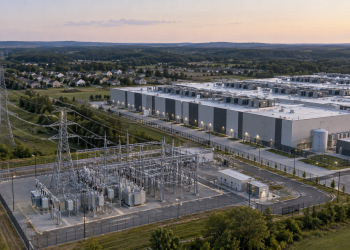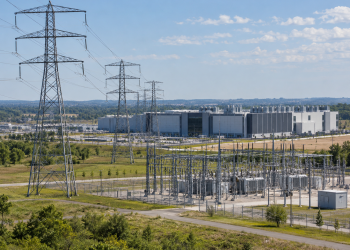
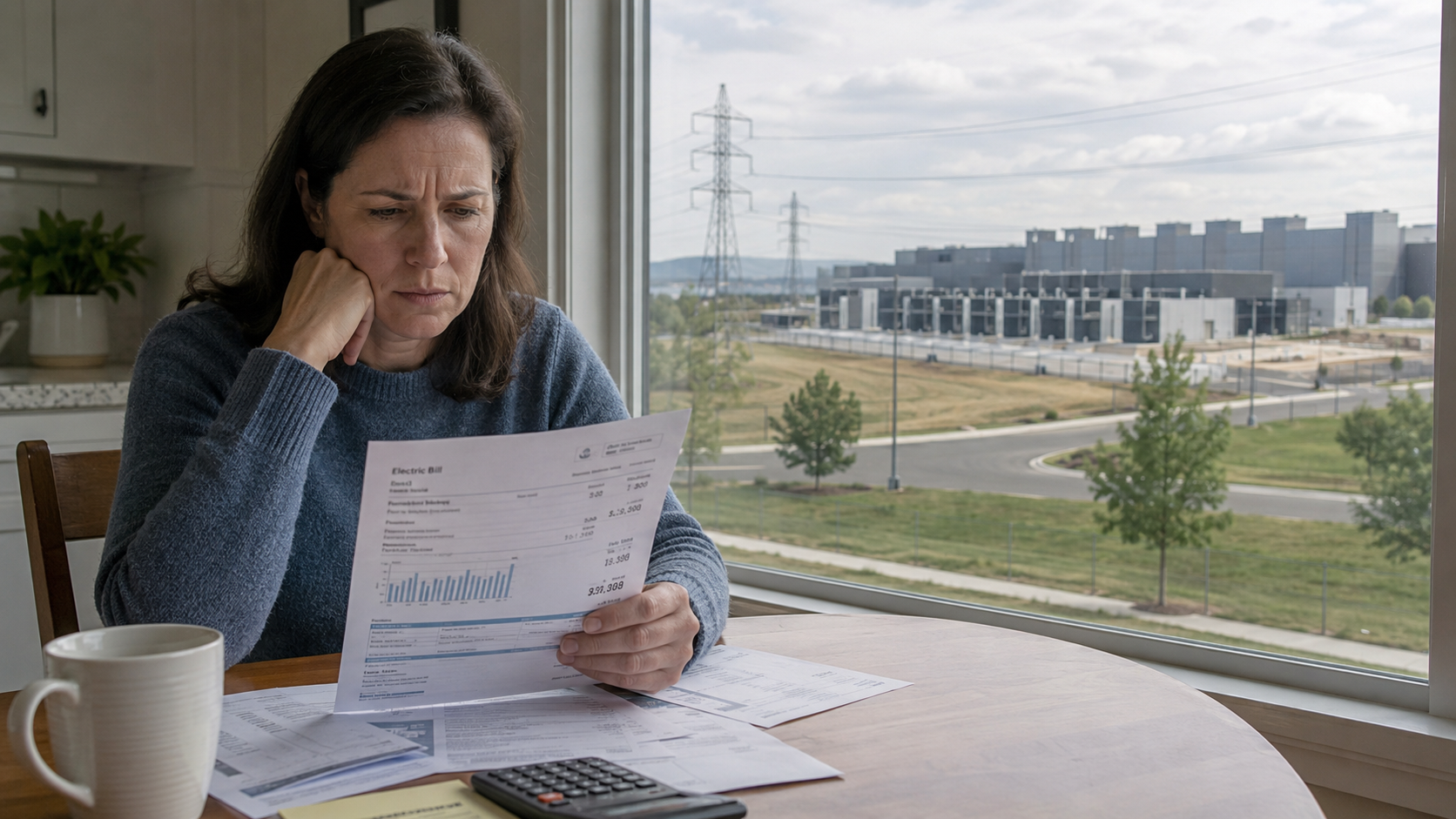
Will my electric bill go up because of a data center? The honest answer is: possibly, but not for the reason most people assume, and not the same way in every state. The mechanism isn’t “the data center down the road is stealing your electrons.” It’s about who pays for the grid upgrades a large new customer requires, and whether your state has drawn a clear line between that customer’s costs and yours.
If you want the baseline grid context first, start with data centers and the power grid. For the cost-allocation mechanics specifically, who pays for grid upgrades for data centers covers the framework this article builds on.
The Short Version
A data center doesn’t raise your bill just by existing nearby. It can raise your bill if the utility spreads the cost of new substations, transmission lines, or generation capacity across all ratepayers rather than billing the data center’s owner directly for the infrastructure built to serve it. Whether that happens depends on your state’s rate design, not on physical proximity to a facility.
What’s Actually Driving Electricity Prices Right Now
Residential electricity prices have been rising well ahead of inflation. The U.S. Energy Information Administration has recorded roughly a 20 to 25 percent increase in average residential rates between 2020 and 2024, and prices continued climbing into 2026. Data centers are one contributor to that trend, but not the only one — aging transmission infrastructure, higher equipment and labor costs, and clean-energy compliance costs are all baked into the same bills.
Where data centers do show up clearly is in wholesale capacity markets. PJM Interconnection, the grid operator covering 13 states and Washington, D.C., saw its capacity auction price jump from about $28.92 per megawatt-day to $269.92 per megawatt-day in a single cycle. PJM attributed that increase to a mix of tighter supply, rule changes, and rising demand — with large new loads, including data centers, cited as part of the demand side of that equation.
Wholesale Prices Aren’t the Same as Your Bill
This is the distinction that gets lost in a lot of the public debate. Wholesale capacity prices are one input into what a utility eventually charges, but they are not a one-to-one pass-through to your monthly statement. A widely circulated claim that residential bills near data centers had risen by as much as 267 percent over five years was fact-checked by PolitiFact and found to be describing wholesale price movement, not the retail rate households actually pay. That doesn’t mean there’s no residential effect — it means the two numbers measure different things, and conflating them overstates the picture in either direction.
What the retail data actually shows is more regional than dramatic. A Rutgers State Policy Lab analysis and a separate Yale Climate Connections review both found that states inside PJM territory — Maryland, Virginia, Ohio, Illinois — have seen residential rate increases running meaningfully above the national average over the past few years, in some cases in the 12 to 16 percent range year-over-year, compared to a national average closer to 6 percent over the same period. States with less data center concentration, or with electricity markets structured differently, have generally not seen the same divergence.
The Real Mechanism: How Utility Rate Design Decides This
Here’s the part that determines whether a specific household ends up paying more: how a state’s public utility commission classifies data centers as customers.
Historically, a lot of utilities treated large new industrial and commercial loads under the same general rate structure as everyone else, which meant the cost of building a substation or upgrading transmission to serve one enormous customer got recovered from the broader ratepayer base — an approach the Environmental and Energy Study Institute says utilities and regulators are now actively moving away from, and one covered in more depth in who pays for grid upgrades for data centers.
A few concrete examples from 2026:
- New Jersey signed legislation in July 2026 requiring data centers consuming 50 megawatts or more to bear the full cost of the infrastructure built to serve them, rather than spreading it across residential ratepayers.
- At the federal level, a bipartisan bill known as the Ratepayer Protection Act (H.R. 9340) cleared House committee 52-0 in July 2026. It would apply to data centers with 100 megawatts or more of peak demand and direct state regulators to consider requiring them to cover the full cost of grid upgrades — a higher threshold than New Jersey’s state law.
- Several major cloud and AI companies — including Amazon, Google, Meta, Microsoft, and OpenAI — have signed voluntary pledges related to limiting their impact on residential rates. These pledges are not legally binding and are not enforceable the way a formal state tariff is.
The pattern across most of this activity is the same: states and utilities are increasingly creating separate “large-load” rate classes and tariffs specifically for data centers, distinct from the residential class, precisely because the old blended-cost model was starting to show up in household bills.
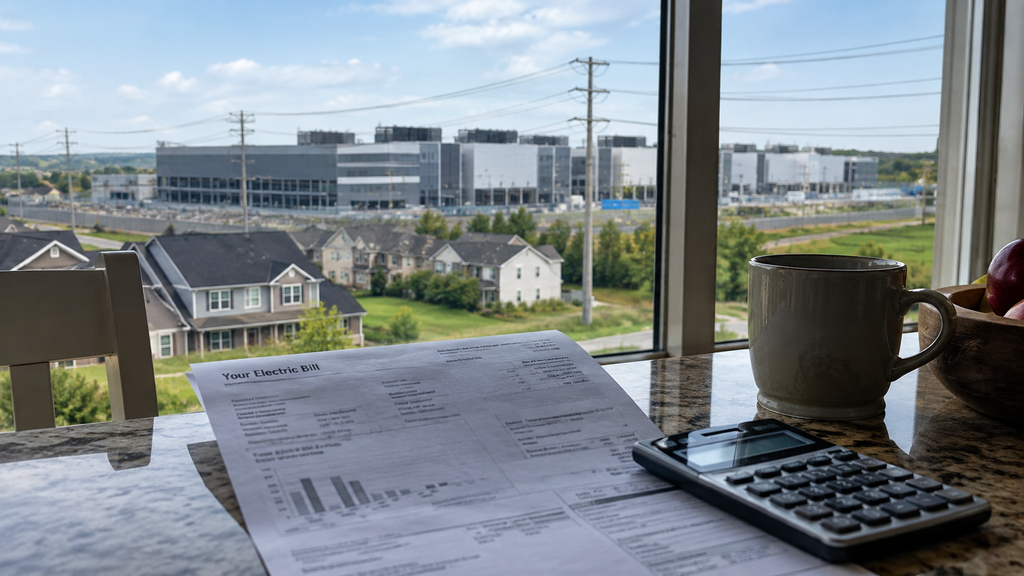
Where You’re Most Likely to See an Effect
Based on the regional data so far, the households most likely to see a measurable data-center-related effect on their bill are those served by:
- Utilities inside PJM territory, given the capacity price increases described above
- Utilities that have not yet adopted a separate large-load rate class for data centers
- Regions with a high concentration of new data center interconnection requests relative to existing grid capacity — see time-to-power for data centers for why that queue matters
If your utility has already implemented a large-load tariff, or if your state has passed cost-allocation legislation like New Jersey’s, the mechanism that would otherwise pass those costs to you has been at least partially closed off.
What You Can Actually Check
Rather than relying on national headlines, the most useful thing a resident can do is check three specific things with their own utility or state public utility commission:
- Has your state or utility created a separate rate class for large industrial/data center loads? If yes, that’s a strong signal that new-customer infrastructure costs aren’t being blended into your bill.
- Is there an open rate case or tariff filing involving a data center in your utility’s territory? These filings are public record — see the process described in how much tax revenue do data centers bring to a city for how to find comparable public filings.
- What has your utility’s actual rate increase been over the past two years, and how does its stated justification compare to neighboring utilities without major data center load? A gap between the two is the clearest local evidence of an effect, one way or the other.
Practical Summary
Data centers can contribute to higher electricity bills, but the connection runs through rate design and infrastructure cost allocation, not physical proximity. Wholesale capacity prices in markets like PJM have risen sharply, and some of that pressure does show up in retail rates in high-data-center states. But a growing number of states and utilities are actively rewriting their rules specifically to keep those costs off residential bills. The most reliable way to know your own exposure is to check whether your utility has a separate large-load rate class, not to assume proximity to a facility determines the outcome.
Frequently Asked Questions
Will my electric bill go up if a data center is built in my town?
Not automatically. It depends on whether your state and utility have a cost-allocation framework that assigns large-load infrastructure costs to the data center itself rather than spreading them across all ratepayers.
Is it true that electric bills near data centers have gone up 267 percent?
No. That figure, cited in a 2026 political statement and reviewed by fact-checkers, refers to wholesale capacity market prices, not the retail rates households pay. Retail increases in high-data-center states have been real but far smaller.
What states have passed laws to protect residential ratepayers from data center costs?
New Jersey signed legislation in July 2026 requiring data centers of 50 megawatts or more to cover the full cost of infrastructure built to serve them. A federal bill, the Ratepayer Protection Act, cleared House committee in a 52-0 vote that same month but had not passed both chambers of Congress as of this writing. Oregon, Oklahoma, and Florida have also enacted large-load rate protections, and several other states have similar measures in progress.
How can I find out if my utility has a separate rate class for data centers?
Check your state public utility commission’s website for tariff filings, or search for your utility’s name alongside terms like “large load tariff” or “data center rate class.” These filings are public record.
Are voluntary pledges from tech companies enough to prevent bill increases?
Pledges from companies to limit their impact on residential rates are not legally enforceable in the way a state-approved tariff is. They may reflect genuine intent, but they don’t carry the same guarantee as a binding cost-allocation rule.